Few musical acts in history have managed to cross language barriers, reshape global pop culture, and build a fanbase of millions quite like BTS. This South Korean group didn't just find international success; they fundamentally changed what the music industry believed was possible for non-English speaking artists.
Whether you've heard their music on the radio, seen their name trending on social media, or simply want to understand why millions of devoted fans call themselves the BTS ARMY, you've come to the right place. This comprehensive guide is designed specifically for those who are new to BTS and want a clear, structured starting point.
In this analysis, you will learn exactly who BTS is, how they rose from humble beginnings to global stardom, and what makes their music and artistry genuinely unique. We'll break down their career timeline, explore their most important albums, and examine the cultural impact they've made along the way. By the end, you'll have a solid understanding of one of the most significant musical acts of the 21st century.
BTS is a seven-member South Korean boy group that debuted on June 13, 2013, under Big Hit Entertainment, a small independent label founded by producer Bang Si-hyuk. At a time when the K-pop industry was dominated by a handful of powerful agencies, Big Hit's modest resources forced BTS to develop something most acts lacked: genuine creative ownership. That underdog origin became central to their identity, and it set the foundation for one of music's most remarkable rises. The label has since rebranded under the BigHit Music name as a subsidiary of the now-massive HYBE corporation, a transformation largely funded by BTS's own commercial success.
The seven members each occupy a distinct creative role within the group. RM (Kim Namjoon) serves as the leader and primary lyricist, known for cerebral, philosophy-driven songwriting that anchors the group's thematic depth. Suga (Min Yoongi), who also records under the alter ego Agust D, is a rapper and in-house producer whose raw, introspective output spans hip-hop and experimental genres. Jin (Kim Seokjin), the eldest member, brings emotional warmth as a vocalist, balancing the group's harder-edged sound. J-Hope (Jung Hoseok) functions as the choreography anchor, a dancer and rapper whose genre-spanning solo work reflects an artist constantly pushing boundaries. Jimin (Park Jimin) is the lead dancer and a vocalist celebrated for his expressive, technically refined performances. V (Kim Taehyung) carries the "visual" designation within the group and delivers a distinctively deep, textured vocal tone. Jungkook (Jeon Jungkook), the youngest member, is affectionately known as the "golden maknae," a title reflecting his exceptional versatility across singing, dancing, and production.
What separates BTS from most K-pop acts is that RM, Suga, and J-Hope have been actively writing and producing music since the 2013 debut. This self-producing capability, rare in an industry where label-assigned songwriters are the norm, gave the group creative authenticity that resonated globally. Every member has also expanded into solo work; Suga's Agust D discography and J-Hope's genre-blending releases are prime examples of how individual artistry strengthens the collective. You can explore each member's full profile and solo catalogue on MyBesh to understand how their individual voices contribute to the broader BTS sound.
The contrast between BTS's debut aesthetic and the broader K-pop landscape at the time was stark and deliberate. Where established acts leaned into choreographed spectacle and aspirational imagery, BTS arrived as a small hip-hop group from a mid-tier independent label, with members RM, Suga, and J-Hope actively writing and producing their own material. This self-producing credibility was almost unheard of for a rookie group in 2013, and it immediately established an authenticity that resonated with Korean teenagers who felt unseen by mainstream entertainment. Big Hit Entertainment was not one of the industry's major labels, which meant BTS had both the freedom and the necessity to differentiate themselves through substance rather than spectacle.
The lyrical content of the School Trilogy was its most defining feature. "No More Dream" confronted the suppression of young people's ambitions under Korea's intensely competitive academic culture. The follow-up track "N.O" from O!RUL8,2? pushed further, directly critiquing a system that pressured students to conform and perform rather than discover who they actually were. Skool Luv Affair added emotional texture by layering adolescent romantic longing into the same school environment, completing a thematic arc that treated teenage experience with genuine seriousness. BigHit Music's own documentation describes the overarching message as addressing "students living without dreams and schools that force conformity," framing school not as a charming setting but as a space of real psychological pressure.
This era of raw, relatable content is widely regarded as the foundation of ARMY's intense long-term loyalty to BTS. According to BigHit Music, "BTS received overwhelming support from their teenage peers because they accurately captured the hearts of teens." That peer-level resonance, built on shared experiences of burnout, uncertainty, and the desire to be understood, created a bond that commercial polish simply cannot manufacture. The fact that 2 Cool 4 Skool has surpassed 700 million Spotify streams more than a decade after its release confirms that this early material continues to find new listeners. For readers who want to go deeper into the specific meanings behind School Trilogy tracks, MyBesh offers editorial-grade song interpretation pages that break down the lyrics, cultural references, and thematic significance of this era in detail.
BTS's sonic journey is one of the most striking genre transformations in modern music history, unfolding across four distinct but interconnected eras that progressively widened their creative reach without abandoning the core identity that made them distinctive from the start.
The School Trilogy era (2013 to 2014) established BTS as a hip-hop group with genuine underground credibility. Debut single "No More Dream" arrived with heavy bass lines, DJ scratches, and raw rap delivery rooted in 90s Korean and American rap traditions. The three EPs from this period used hip-hop as a vehicle for social commentary, targeting the suffocating pressure placed on Korean youth around academic performance and ambition. This was not typical K-pop, and that distinction mattered.
The shift arrived in 2015 with "I Need U," the lead single from the Most Beautiful Moment in Life series. The track blended melancholic melodies with soft trap beats and synth-pop R&B textures, signaling a deliberate move away from hardcore hip-hop toward something more emotionally layered. "Run" followed with alternative rock energy, incorporating guitar riffs and fast-paced drums that reflected influences spanning J-rock and Western pop punk. According to NME's 10th anniversary retrospective on BTS, this period established a pattern of "musical adventure and curiosity" that would define everything that followed.
The Wings and Love Yourself arcs (2017 to 2019) represented BTS at their most conceptually ambitious. Albums like Love Yourself: Tear and Map of the Soul: 7 functioned as thematic narratives addressing healing, self-acceptance, and psychological growth, with the Map of the Soul series drawing explicitly on Jungian psychology. The sonic palette expanded dramatically to incorporate orchestral pop, EDM, R&B, and trap within single album cycles. These were not genre experiments for their own sake; they served the emotional and philosophical weight of the material.
The global pop crossover that began with the Map of the Soul series and accelerated with "Dynamite" in 2020 brought BTS to audiences who had never encountered K-pop before. Critically, Korean-language releases remained central to their identity even at peak Western crossover, a choice that reinforced authenticity over commercial convenience.
What Never Changed
Beneath every genre shift runs a single consistent thread: BTS consistently chose depth over surface. From early tracks challenging Korea's education system to mature explorations of mental health and Jungian archetypes, the group refused the easy path of straightforward pop themes. This philosophical seriousness, present from debut and sustained across every era, is what converted casual listeners into deeply invested fans.
That investment shows in the numbers. According to ChartMasters, BTS has accumulated over 161.3 million equivalent career album sales, a figure that confirms their evolving sound built audience rather than losing it.
Self-Production as the Stabilizing Force
The reason BTS could shift genres so fluidly without losing their artistic identity comes down to who stayed in control. As Tem.Polor's genre analysis of BTS's discography notes, the group "slowly evolved their sound into mainstream pop, EDM, and R&B while keeping the introspective, socially conscious messaging that characterised their hip-hop origins." RM, Suga, and J-Hope were writing and producing before the group even debuted, and they remained at the creative core through every subsequent era. That continuity of authorship meant each genre expansion felt like a natural step forward rather than an externally imposed reinvention. The voice stayed the same even as the instruments around it changed.
Key Albums That Defined Each Era
Four albums stand as the clearest milestones in BTS's artistic journey, each one a direct response to where the group was in their lives when they made it.
Wings (2016) marked BTS's transition from promising newcomers into serious artists with something genuine to say. Released in October 2016, this was their second full studio album and the moment they earned their reputation as self-producing musicians willing to tackle difficult emotional territory. The album explored themes of temptation, individuality, and growing up, with each member receiving a solo track that revealed their personal voice. Standout tracks like "Blood Sweat and Tears," "Lie," and "First Love" showed a group pushing past commercial formula into something more artistically ambitious.
Love Yourself: Tear (2018) escalated the stakes dramatically. As the second chapter of the Love Yourself trilogy, this album confronted pain and emotional separation head-on through its lead single "Fake Love." Conceptually, it arrived at a moment when BTS were accelerating toward global stardom at a speed few K-pop acts had ever experienced. The pressure and disorientation of that rapid rise is embedded in the album's themes. It became their first Billboard 200 No. 1, a landmark achievement that confirmed their crossover into mainstream Western markets.
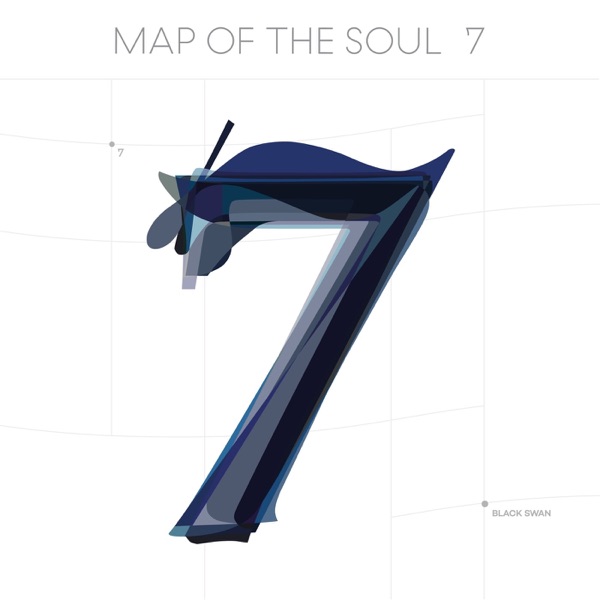
Map of the Soul: 7 (2020) arrived in February 2020 as a deliberate act of self-examination. Released at the peak of their global fame, the album treated BTS's own seven-year history as creative material, with tracks like "ON" and "We Are Bulletproof: The Eternal" functioning as callbacks to their earliest recordings. The title references both seven years of activity and the seven members, making it their most intentionally reflective work. You can explore the full tracklist and lyrical analysis on Map of the Soul: 7.
BE (2020) is statistically their most successful album, accumulating 14.9 million equivalent units including 4 million in pure sales. Recorded during the COVID-19 pandemic while the world remained largely shut down, the album channeled that collective isolation into music that felt unusually personal and unguarded. Tracks like "Life Goes On" and "Blue and Grey" spoke directly to pandemic-era grief in a way that resonated globally. The era also produced "Dynamite," their first all-English single, which has accumulated 2.3 billion Spotify streams and remains their most-streamed individual track to date, representing the commercial ceiling of their English-language pivot. For readers who want complete lyrical breakdowns of any of these releases, MyBesh offers detailed song interpretations and album-by-album analysis to help you understand the full meaning behind each era.
What Changed and What Never Did
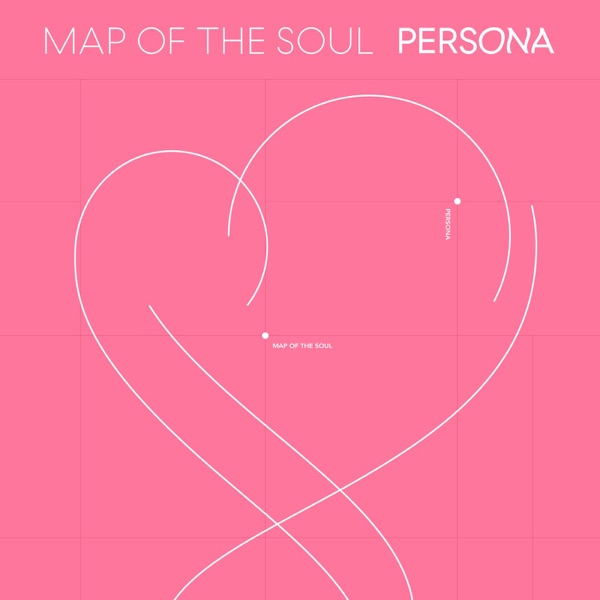
Across every genre shift and reinvention BTS has undertaken, certain artistic signatures have remained untouched. Self-examination is the group's lyrical default, present in the anxious school-age confessions of No More Dream and equally present in the introspective soul-searching of Map of the Soul: Persona. The seven-member dynamic consistently functions as a narrative device, with songs cycling between individual struggle and collective reassurance in ways that reflect the group's actual composition. Direct address to ARMY is not a marketing device layered on top of the music; it is a structural element woven into bridges, outros, and album interludes across every era.
The decision to maintain Korean-language releases throughout the peak Western crossover window was both a cultural stance and a calculated signal of authenticity. While other K-pop acts repositioned themselves with English-dominant catalogs to court Western radio, BTS released Dynamite and Butter as English-language singles while simultaneously maintaining Korean-language album bodies. This meant listeners who discovered BTS through a pop radio hit could follow that thread directly into a deeper, Korean-language catalog without the jarring identity gap that plagued groups who abandoned their origin sound entirely. Growth for BTS has always meant expansion, adding new sonic layers without erasing earlier ones.
This consistency is precisely why ARMY engagement has remained sustained across more than a decade. A fan who discovered BTS through the School Trilogy and a fan who first heard Dynamite with its 2.3 billion Spotify streams can both locate themselves meaningfully in the same catalog. The entry points differ; the connective tissue does not.
BTS's Defining Songs: Lyrics, Themes, and Meanings
What makes a song matter? For BTS, the answer has never been about chart position or streaming numbers alone. This editorial guide approaches their catalogue differently: as a curated map of thematic chapters, each one representing a distinct emotional and philosophical territory. The five songs below were chosen because they reward close reading, not just repeated listening.
No More Dream (2013): Defiance as a Question
BTS's debut track is most often remembered for its aggressive energy, but its real power lies in the challenge it poses. Rather than simple rebellion, "No More Dream" forces a harder confrontation: not just "reject what society wants" but "do you even know what you want instead?" For a generation of South Korean youth navigating intense academic and social pressure, that distinction matters enormously. The song functions as a manifesto for self-determination, one that still opens BTS concerts decades after its release.
Blood Sweat and Tears (2016): The Cost of Ambition
Released during the Wings era, this track dramatises the seductive danger of success itself. The narrator is not simply tempted by sin; he willingly surrenders to it, raising the unsettling idea that artistic ambition and moral compromise may be inseparable. Rooted in the themes of Hermann Hesse's novel Demian, which directly inspired the entire Wings album cycle, the song maps Hesse's journey toward selfhood onto BTS's own transition from teenagers into self-aware artists. The literary symbolism woven through the lyrics gives listeners multiple interpretive passes, from surface-level drama to philosophical allegory.
Spring Day (2017): Collective Grief in Pop Form
"Spring Day" uses winter as a metaphor for separation and spring as the impossible hope of reunion. It is widely interpreted by fans and cultural analysts as a response to the 2014 Sewol Ferry tragedy, in which hundreds of young lives were lost; it is important to note this connection remains a fan interpretation rather than a statement confirmed by BTS. Even without that specific context, the song encodes something rare: genuine communal mourning, shaped into a pop melody patient enough to let grief breathe.
Fake Love (2018): The Erasure of Self
This track goes further than heartbreak. The narrator does not simply sacrifice for love; he erases his identity entirely to become whoever his partner needs. The philosophical question underneath the chorus is whether a relationship built on a fabricated self constitutes love at all. Carl Jung's concept of the persona, which would later anchor the Map of the Soul series, feels present here in embryonic form.
Black Swan (2020): When Art Stops Feeling
Drawing on choreographer Martha Graham's writings about the fear of creative death, "Black Swan" treats artistic numbness as an existential crisis rather than a temporary mood. For BTS, a group whose entire public identity rests on the authenticity of their craft, the possibility that music might one day feel like nothing represents the deepest imaginable loss.
Across all five tracks, a consistent pattern emerges: BTS lyrics operate on at least two levels simultaneously, the emotional and the philosophical. The Wings era pulls directly from Hesse's Demian, while the Map of the Soul series structures itself around Jungian archetypes including ego, shadow, and persona. These are not casual references; they are load-bearing frameworks that reward sustained study.
For readers who want to go deeper, MyBesh offers full song interpretations, lyric breakdowns, and community discussions for each of these tracks, giving you the tools to unpack every layer on your own terms.
'Dynamite' and the English-Language Pivot
Released on August 21, 2020, "Dynamite" represented a deliberate strategic break from everything BTS had built linguistically over seven years. It was the group's first single composed entirely in English, a choice driven by a specific convergence of factors: the COVID-19 pandemic had disrupted touring revenue globally, Western radio infrastructure remained largely closed to Korean-language releases, and Grammy eligibility rules favored tracks with broad English-speaking commercial exposure. BTS member V explained the decision directly, noting that the song's cheerful energy made it feel like the right vehicle to lift listeners during an extraordinarily difficult period. The timing also positioned the track ahead of Grammy and Billboard nomination eligibility windows, removing the language barrier that had previously limited their access to American awards circuits and mainstream radio playlists.
The commercial results confirmed the pivot's logic with precision. "Dynamite" debuted at No. 1 on the Billboard Hot 100, making BTS the first Korean act to achieve that milestone, and went on to accumulate 2.3 billion Spotify streams, making it their most-streamed individual track on the platform. The song also broke YouTube's 24-hour viewing record upon release, and a performance at the 2020 MTV VMAs dramatically accelerated its Western visibility. Fan reception, however, was more complicated. A portion of the BTS fanbase and K-pop commentators argued that achieving mainstream Western success through English rather than Korean reinforced a troubling precedent: that non-English music must linguistically assimilate to be taken seriously by Western industry structures.
The sonic profile of "Dynamite" is worth examining carefully, because it tells you something important about the deliberateness behind it. The song is retro-pop and celebratory, built around disco-funk influences and brightly colored imagery. This stands in sharp contrast to BTS's Korean-language catalog, which routinely engages with youth anxiety, identity fragmentation, and psychological pressure across albums like Wings and Map of Soul: 7. "Dynamite" was not a creative compromise; it was a conscious stylistic tool, designed to function within a specific commercial and emotional context rather than represent the group's full artistic range.
That commercial context produced lasting results. According to data documented by ChartMasters, BTS ranked as the No. 1 top-selling artist globally in both 2020 and 2021, surpassing Taylor Swift, Drake, and Adele across both years. The reach unlocked by "Dynamite" laid the foundation for follow-up English-language singles "Butter" and "Permission to Dance" in 2021, confirming that the pivot was not a one-time experiment but a calculated expansion of their commercial ceiling during a period when live performance revenue had effectively disappeared worldwide.
'Arirang' and the 2026 Return: What 'Swim' Is Really About
When BTS titled their fifth studio album ARIRANG, released on March 20, 2026, they made arguably the most culturally charged naming decision of their entire career. "Arirang" is not merely a word; it is Korea's most beloved and enduring traditional folk song, recognized by UNESCO as an Intangible Cultural Heritage of Humanity. The song has been sung for centuries as an expression of national identity, and its core emotional themes are separation, longing, resilience, and the hope of reunion. For a group returning from an extended hiatus during which all seven members completed South Korea's mandatory military service, choosing this title was a deliberate, layered statement. The name announced, before a single lyric was heard, that this album would be about what it means to be apart and then whole again.
The Lead Single as Emotional Blueprint
The title track "Swim" functions as the album's emotional thesis statement. The aquatic metaphor at its core is precise and purposeful: swimming implies forward movement against resistance, survival through active effort rather than passive waiting, and the gradual process of returning to the surface after a long submersion. Each of those images maps directly onto what BTS experienced individually during the hiatus years, including solo projects, separate creative growth, and the challenge of maintaining identity while separated from the group dynamic. "Swim" frames the reunion not as a simple return to where things were, but as something earned through sustained effort. Billboard confirmed on March 30, 2026 that "Swim" debuted at No. 1 on the Billboard Hot 100, making it BTS's seventh chart-topping single on that chart, while ARIRANG simultaneously debuted at No. 1 on the Billboard 200, also their seventh No. 1 album. The double seventh was a milestone with few parallels in modern chart history.
Verified Chart Performance and Media Coverage
Beyond the Billboard achievements, "Swim" reached No. 1 on iTunes Top Songs charts across dozens of countries, and the album generated record-breaking first-day streaming interest. Outlook India reported that the 14-track album became the highest first-day streamed Pop and K-Pop album on Apple Music worldwide. The New York Times and Forbes both covered the release during March and April 2026, reflecting the kind of sustained mainstream Western press attention that extends well beyond the dedicated K-pop audience. Forbes also reported in April 2026 that BTS denied a major hip-hop artist a new No. 1 chart position during the comeback period, representing yet another chart history milestone as the group reasserted commercial dominance across formats.
A Note on Data and Where to Go Next
One important caveat for readers building their understanding of this era: first-day sales figures circulating in fan communities, including reports of nearly four million copies sold within 24 hours, should be treated as unverified until cross-referenced against official chart body data from sources such as Luminate or Hanteo. Fan-reported numbers are often directionally accurate but should not be cited as confirmed statistics without that additional check. For the complete lyrical breakdown of "Swim" and the full editorial analysis of the ARIRANG album, including how individual tracks fit into the broader thematic arc of reunion and resilience, visit MyBesh's ARIRANG album page and the dedicated "Swim" interpretation page, where analysis is published and updated as it becomes available.
The Numbers Behind the Phenomenon: Chart Records and Milestones
To understand BTS's cultural weight, it helps to look at what the numbers actually represent, because when examined carefully, they tell a story of scale that goes beyond any single hit or headline moment.
Career Sales: A Scale That Rewrites Expectations
BTS has accumulated over 161.3 million equivalent career album sales, according to ChartMasters, a figure that uses a methodology converting streams, digital downloads, physical purchases, and airplay into a single unified number. This approach captures the full footprint of how people consume music, not just how many CDs change hands. Within that total, BTS has moved an estimated 45.7 million physical album sales, a figure that stands out in an era when physical music formats have declined sharply across the industry. Their 30.9 billion total YouTube views further reflect an audience that returns repeatedly, not just passively streams in the background. Additionally, community sources have reported BTS crossing 49 billion total Spotify streams, a figure that would make them the first Asian act to reach that threshold; however, this number is drawn from fan community reporting and has not been officially verified by Spotify, so it should be treated as a strong indication rather than a confirmed figure.
Music Show Wins: Why Weekly Trophies Matter
For readers unfamiliar with the K-pop ecosystem, understanding BTS's award record requires a brief explanation of how Korean music television works. Weekly music shows such as Inkigayo, Music Bank, M Countdown, and Show! Music Core are televised competition programs where artists perform their current singles and are scored across a combination of digital chart performance, physical sales, broadcast points, and fan votes. Winning a trophy on one of these programs is a concrete, data-driven result, not a popularity contest decided by a single panel. BTS holds 179 Music Show Awards and 127 End of Year Awards, the most accumulated by any artist in Korean music history. These numbers reflect week after week, release cycle after release cycle, of a group placing first across multiple independent data inputs simultaneously.
Perfect All-Kill: Sustained Dominance, Not a Lucky Streak
A Perfect All-Kill (PAK) is the highest single-song achievement in South Korean charting. It requires a track to hold simultaneous No. 1 positions across all major Korean real-time, daily, and weekly charts, including Melon, Genie, Bugs, and the Instiz iChart aggregate. Any one PAK is rare; it demands dominance across chart formats that measure consumer behavior across different timeframes at once. BTS has achieved 44 Perfect All-Kills, a record that separates isolated commercial success from structural market control. Reaching 44 means this outcome repeated itself across multiple albums and eras, not as a product of a single cultural moment, but as a consistent pattern.
Outselling the World's Biggest Names
BTS was the No. 1 top-selling artist globally in both 2020 and 2021, according to ChartMasters. In 2020, they surpassed Taylor Swift and Drake in total album equivalent units worldwide. In 2021, they finished ahead of Taylor Swift and Adele. For a reader new to K-pop, this is perhaps the clearest reference point available: in back-to-back years, a seven-member Korean group outsold the dominant commercial forces of Anglo-American pop music on a global basis.
Breaking the Hot 100 Ceiling
When BTS made "Dynamite" the first No. 1 on the Billboard Hot 100 by a Korean act, they broke a structural barrier that had long kept non-English-language pop from reaching the summit of America's most prominent singles chart. This was not simply a personal milestone; it demonstrated to the broader music industry that language was not a commercial ceiling in the U.S. market. The visibility that followed created measurable space for subsequent K-pop acts seeking crossover recognition, making BTS's Hot 100 breakthrough one of the most consequential chart moments of the decade.
The Hiatus and Return: What 'Arirang' Means for BTS's Story
Understanding where Arirang fits in BTS's larger story requires stepping back to examine the events that made the album necessary in the first place.
The Mandatory Service Pause and What It Meant
South Korea legally requires all able-bodied male citizens to complete approximately two years of military service, and BTS had long been the subject of public debate regarding when and how that obligation would apply to its members. Beginning with Jin in late 2022, each of the seven members enlisted in sequence, creating a structured but definitive pause in group activity. The announcement was deliberate rather than abrupt; the group framed the hiatus as a temporary chapter rather than an ending, a distinction that mattered enormously to their fanbase, known as ARMY. The pause was not a creative void either. Members pursued solo work throughout the service period, with Jung Kook's Golden reaching the top ten in fourteen countries and demonstrating that individual artistic identities had matured independently during the separation.
'Proof' as the Bridge Document
Before the hiatus fully settled, BTS released the anthology compilation Proof in June 2022. Where most compilation albums function as label products designed to fill catalogue gaps, Proof operated differently. It collected career-defining tracks alongside unreleased material and demo recordings, functioning simultaneously as a career retrospective for new listeners and an intimate message to longtime ARMY about continuity. The inclusion of unheard content signaled that BTS was not closing a chapter but preserving its texture for safekeeping. For a group whose relationship with fans has always been built on emotional transparency, Proof served as a formal acknowledgment: we were here, this is what we built, and we are coming back.
'Arirang' as Cultural Repositioning, Not Just a Comeback
The naming of Arirang carries interpretive weight that purely commercial comeback albums rarely achieve. "Arirang" references one of Korea's most ancient and emotionally resonant folk songs, traditionally associated with themes of separation, longing, and return. After years of English-language singles and deliberate Western pop crossover strategies, choosing this title represents a conscious pivot back toward Korean cultural identity. Critics noted that the album's first half centers on rap-forward production, surprising Western commentators who had primarily associated BTS with polished pop output, but this was entirely consistent with where the group began. As one analysis of why BTS chose this title observed, the name changes what looks like a standard comeback into something far more purposeful.
Scarcity, Media Attention, and Sustained Relevance
Forbes, Rolling Stone, and other major outlets published dedicated coverage of Arirang at release, confirming that BTS's cultural footprint not only survived the hiatus but intensified through absence. This pattern is familiar in music history; artists who disappear at peak relevance tend to return to amplified demand, as audiences spend the intervening years re-engaging with existing catalogues and building anticipation. BTS's case follows that logic, with nearly four million first-day album copies sold and the title track "Swim" reaching number one on iTunes in 90 countries. The Slate review noted the return was "surprisingly rocky," suggesting the reunion was not frictionless, but even a complicated return generated the kind of cultural conversation that most artists cannot manufacture.
The Narrative That Mirrors the Music
What gives Arirang its deepest layer of meaning is that the hiatus-to-reunion arc is structurally identical to the lyrical themes BTS has explored throughout their career: separation, individual growth, and the difficult work of returning changed but intact. The folk song Arirang itself carries that emotional DNA, with its traditional lyrics expressing sorrow at parting and hope for reunion. A group that spent years writing about identity, longing, and the passage of time had, without planning it, lived out the emotional architecture of their own catalogue. That kind of meta-resonance cannot be engineered; it emerges only when an artist's real life and creative output align with genuine authenticity.
What Is ARMY? The Fan Community That Changed Music
ARMY stands for Adorable Representative MC for Youth, and the name was not chosen casually. When BTS officially established their fanbase on July 9, 2013, less than a month after their debut, they embedded a deliberate logic into the name itself. In Korean, BTS's full name is Bangtan Sonyeondan, which translates roughly to "Bulletproof Boy Scouts." An army and bulletproof are inseparable concepts, so BTS and ARMY are, by definition, inseparable too. This framing positioned the relationship not as performers and passive admirers, but as a mutual defense pact. From day one, the group and their fans were coded as two sides of the same protection. As J-Hope noted in Weverse Magazine, "ARMY is as famous as BTS now," a statement that, given what the fanbase has accomplished, reads less like flattery and more like an accurate assessment.
A Fanbase That Operates Like an Organization
What distinguishes ARMY from most fan communities is the degree of structural sophistication behind their collective action. Coordinated streaming parties, where fans organize to stream a new release simultaneously across multiple platforms, are standard practice. Members maintain detailed, data-driven tracking spreadsheets to monitor song streams, album sales, and music video views in real time, then share that data to direct collective effort toward whichever metric needs the most support. Translation networks, often called subtitling squads, convert BTS content into dozens of languages within minutes of release, ensuring that nothing remains inaccessible to non-Korean-speaking listeners. ARMY has also crowdfunded billboard advertising campaigns in locations including Times Square and other major global cities to mark milestones. Internet cultural studies researcher Crystal Abidin of Curtin University describes ARMY as a "participatory archive," noting: "They are the interpreters, the translators, the marketers, and the archivists."
An Interpretive Community, Not Just a Fanbase
ARMY's most lasting contribution to BTS's cultural footprint may be analytical rather than promotional. Within the fandom, BTS's complex lyrical themes and audiovisual storytelling have generated entire communities of practice built around in-depth lyric analysis threads, music video theory discussions, and long-form video essays exploring thematic arcs across albums. Because so much of BTS's catalogue is in Korean, fan translations and cultural interpretations are not supplementary content; they are often the primary way millions of listeners encounter the music's meaning. Researchers have described this as a distributed editorial layer, built by fans across scattered social media platforms, that shapes how people emotionally respond to BTS's songs long after official releases. This is precisely the gap that a platform like MyBesh is designed to address. Rather than leaving that interpretive work fragmented across forums and fan accounts, MyBesh provides a structured, editorial-grade home where song interpretation pages and community features bring that analysis into one organized space.
The Chart Impact, With Full Context
ARMY's organized behavior has measurably contributed to BTS's chart record, including their 44 Perfect All Kills on South Korean domestic charts, a figure representing simultaneous number-one positions across Melon, Genie, Bugs, and the Billboard K-pop Hot 100 at once. "Butter" accumulated over 40 million Spotify streams in its first 24 hours. "Dynamite" became the first song by a Korean act to reach number one on the Billboard Hot 100, a milestone ARMY is widely credited with supporting through coordinated streaming and purchasing. It is worth being clear, however, that organic listener behavior and ARMY coordination work together to produce these numbers. The scale of BTS's catalogue, over 161 million equivalent album sales across their career, reflects genuine musical reach, not solely organized fandom activity. As an unnamed BTS publicist told Forbes in 2018: "Nothing they've achieved has come without hard work, passion, and ARMY." That formulation, notably, lists all three as distinct contributors.
Explore BTS on MyBesh: Every Song, Lyric, and Meaning
Statistics and chart records tell you what BTS achieved. MyBesh tells you what it meant. For listeners who want to move beyond numbers and into the actual language of BTS's music, MyBesh serves as a dedicated music reference platform built specifically for that depth of engagement.
The platform covers BTS's full discography from the ground up. Whether you are starting with the School Trilogy era, working through the Wings and Love Yourself periods, or arriving fresh via the 2026 comeback, MyBesh offers full lyrics with translations, editorial-grade song meaning analysis, and era-by-era album pages that provide context alongside the words themselves. Solo output is covered in equal depth, with dedicated discography pages for all seven members, including Agust D's solo catalogue, RM's introspective rap projects, and J-Hope's genre-spanning releases. Community features allow ARMY members and new listeners alike to contribute interpretations and engage in discussion around individual tracks.
For the 2026 comeback specifically, MyBesh has moved quickly. The Arirang album page and the dedicated interpretation page for lead single "Swim" represent first-mover editorial resources that engage with the cultural and lyrical weight of both tracks at a level that data-focused platforms simply cannot replicate. Given that much of BTS's lyrical meaning is embedded in Korean language nuance and cultural reference, having structured, searchable editorial analysis in one place makes a material difference for non-Korean-speaking listeners.
MyBesh also functions as a discovery engine. Using the platform's genre and artist tools, you can explore music that shares thematic or sonic DNA with BTS across more than 40 genre categories, including K-pop, alternative R&B, and introspective hip-hop. If BTS's music has convinced you that songs mean something, MyBesh is where that conviction finds a home.
BTS in 2026: Why the Story Is Still Being Written
BTS's longevity is not a product of careful timing or industry machinery. It is the result of a decade-long commitment to honest songwriting, deliberate artistic growth, and a fan relationship rooted in genuine mutual respect, all of which trace directly back to the School Trilogy's unflinching look at youth, pressure, and identity. Groups that build on that foundation do not fade when trends shift; they adapt and deepen.
The 2026 return proved this. ARIRANG was a commercial landmark, selling nearly 4 million copies in its first 24 hours and spending three consecutive weeks at number one on the Billboard 200, a first for any Asian act in chart history. The album title carried equal cultural weight, invoking Korea's most treasured traditional folk song and signaling a return to roots that longtime ARMY recognized immediately while welcoming new listeners without any prior knowledge required.
If you are new to BTS, start with "Swim," the lead single from ARIRANG, or with "Spring Day," one of the group's most enduring earlier tracks exploring loss and perseverance. Both offer immediate emotional access to the thematic world BTS has spent over a decade building. From there, MyBesh provides full lyrics, song interpretations, and curated discography context to guide your deeper exploration.
What BTS ultimately represents in global music is straightforward: proof that language is never the real barrier to connection. A group willing to write honestly about pressure, identity, and love will always find an audience, regardless of genre or geography.
Conclusion
BTS is far more than a pop group. They are a cultural phenomenon that proved music transcends language, that authenticity builds lasting connection, and that dedicated artistry can reshape an entire industry.
Here are your key takeaways from this guide:
- Their rise from a small Korean label to global dominance is one of music's most remarkable stories
- Their discography rewards deep listening, with each album reflecting genuine artistic growth
- The ARMY fandom represents a new model of fan engagement built on community and meaning
- Their influence on pop culture, mental health conversations, and Korean media is genuinely historic
Now it's your turn to explore. Start with one album, one song, or one concert film. Let the music speak for itself. You may just discover why millions of people around the world consider BTS not simply their favorite artists, but a meaningful part of their lives.

 via depositphotos ↗








![Cover of MIC Drop (feat. Desiigner) [Steve Aoki Remix] - Single](https://is1-ssl.mzstatic.com/image/thumb/Music116/v4/77/93/70/779370e4-7b31-263e-e33e-50b07b3f4eb6/191773892210_Cover.jpg/600x600bb.jpg)
