From a viral YouTube video to global superstardom, Charlie Puth has carved out one of the most fascinating career paths in modern pop music. His journey is a compelling example of how raw talent, combined with digital opportunity, can transform an ordinary kid from New Jersey into a Grammy-nominated artist with billions of streams worldwide.
But who exactly is Charlie Puth, and what makes his music stand out in an incredibly competitive industry? Whether you have been humming along to "Attention" without knowing his name or you simply want to learn more about this talented musician, this guide is designed with you in mind.
In this post, we will walk you through everything you need to know about Charlie Puth. You will discover his early life and musical beginnings, explore his full discography, and gain a clear understanding of how his career has evolved over the years. By the end, you will have a solid foundation for appreciating both the artist and the music that has made him a recognizable name across the globe.
Charlie Puth makes pop music that sounds like it was built from the inside out: clean, close-mic'd vocals riding precisely engineered beats, a falsetto that lands exactly where it needs to, and a production clarity that reveals craft rather than hiding it. He writes, records, and produces his own material, a distinction that sets him apart from most artists operating at his commercial scale.
His career spans three studio albums on Atlantic Records, a catalog of high-charting singles, and collaborations ranging from Wiz Khalifa to Jung Kook of BTS. The BTS collaboration alone, "Left and Right," accumulated 675 million plays on YouTube Music, illustrating the cross-genre reach his production instincts have consistently opened up. You can explore his full official channel, which now counts over 23 million subscribers on YouTube, to trace that evolution from early bedroom uploads to polished studio releases.
Charles Otto Puth Jr. was born on December 2, 1991, and raised in Rumson, New Jersey, a small borough on the Jersey Shore where he began studying piano at age four. By 2009, while still a teenager, he was uploading covers and original compositions to YouTube, building an audience through consistency and an ear that was noticeably more controlled than most teen bedroom recordings of that era. His early videos carried a distinctive texture: acoustic guitar or piano as the sole accompaniment, vocals placed front and center with minimal processing, and an instinctive dynamic precision that drew comparisons to his later-publicized claim of having perfect pitch.
Puth enrolled at the Berklee College of Music in Boston, where the informal intuition he had developed through YouTube was given formal structure. Berklee's production-intensive curriculum sharpened his understanding of arrangement, mixing, and the mechanics of what makes a pop song work at a technical level. That training would later become central to how he approached his own records, producing and co-producing much of his catalogue rather than handing those decisions to outside collaborators.
What distinguished Puth from many peers who followed a similar YouTube-to-mainstream path was the sequence of his career moves. Before releasing his own commercial material, he had already begun writing and producing for other artists, establishing professional credibility behind the boards before stepping in front of them. His Wikipedia profile documents this period as foundational rather than incidental, a deliberate build rather than an accidental one. The audience he accumulated before any major-label involvement gave him leverage that most debut artists do not carry into their first industry conversations.
The moment "See You Again" opens, its purpose is clear before a single word lands. A spare piano figure introduces Puth's tenor, clean and unguarded, carrying the kind of weight that only comes when a song is written for a specific grief. Commissioned for the Fast and Furious 7 soundtrack in 2015, the track was conceived as a tribute to actor Paul Walker, who died in a car accident in November 2013. That context is not incidental to the song; it is the song. The emotional architecture, a quiet verse building toward a soaring chorus, works precisely because the occasion demands it.
Sonically, "See You Again" is built on restraint. Puth holds his verse delivery measured and close, letting the piano carry the melodic weight before the chorus opens into something wider and more urgent. The contrast between the two registers is the track's central dynamic: controlled grief giving way to release. Wiz Khalifa's rap verses provide textural contrast without disrupting the song's emotional throughline. The production, anchored in acoustic piano with orchestral swells added in the full version, keeps the focus on vocal delivery rather than studio spectacle.
The song reached number one on the Billboard Hot 100 and held that position for twelve consecutive weeks in 2015, making it one of the longest-running number-one singles of that year. It was certified Diamond by the RIAA, indicating US sales and streams equivalent to ten million units. Globally, it ranked among the best-selling singles of 2015 and became one of the most-streamed songs in the history of YouTube at the time of its release.
Puth's debut studio album, Nine Track Mind, followed in January 2016 via Atlantic Records. The record introduced two additional singles that extended his commercial momentum: "Marvin Gaye," a duet with Meghan Trainor that reached the top five in the UK, and "One Call Away," which peaked at number twelve on the Billboard Hot 100. Both tracks reinforced the sonic profile Puth had established with "See You Again," favoring clean vocal production and accessible melodic hooks over experimental arrangements.
Nine Track Mind is best understood as a focused pop-soul debut rather than a statement of artistic range. Its nine tracks are compact and radio-ready, designed around Puth's vocal precision and his instinct for a memorable chorus. The album does not push against genre boundaries or test unusual production ideas; it demonstrates technical command within a deliberately legible commercial framework. For listeners new to his work, it remains the clearest introduction to what Puth does well: melody-first songwriting, controlled vocal dynamics, and production that serves the song without drawing attention to itself.
Coming Into His Own: Voicenotes (2018)
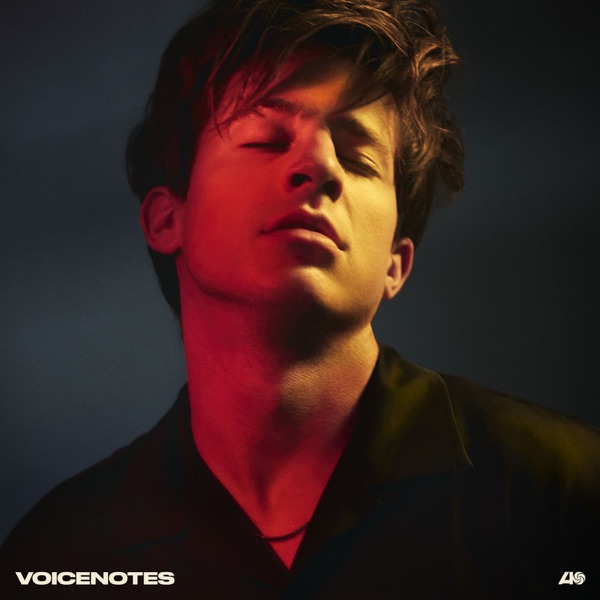
Released in May 2018 via Atlantic Records, Voicenotes marked a clear turning point in Charlie Puth's artistic trajectory. Where Nine Track Mind leaned on radio-ready polish and the commercial infrastructure built around "See You Again," Voicenotes was more deliberate, more self-directed, and sonically denser. Puth co-wrote and co-produced the majority of the record, taking a level of creative ownership that his debut had only partially allowed. The result was an album that sounded like someone who understood pop from the engineering console up, not just the vocal booth.
The album's arrival had been telegraphed a year earlier by lead single "Attention," released in 2017. The track is built around a cool, almost mechanical funk groove: clipped guitars, a bass line with genuine weight, and a vocal delivery that stays deliberately detached. That detachment is the point. Lyrically, "Attention" is about someone who performs romantic interest without feeling it, and the production mirrors the theme precisely. There is no warmth in the arrangement because the song is about the absence of warmth. It became one of Puth's most recognizable songs, and it announced that Voicenotes would not be chasing the same sound as its predecessor.
The shift between the two albums is audible in the low end alone. Nine Track Mind had a bright, treble-forward sheen that suited mainstream radio in 2016. Voicenotes traded that brightness for tactile texture: bass that sits closer to the surface, grooves that breathe and pull rather than pulse at a standard tempo. The album invites closer listening than the debut required.
Two collaborations deepened that shift in tone. "Done for Me," featuring Kehlani, is a slow-burn R&B track that leans into restraint rather than spectacle. "If You Leave Me Now," with soul veteran Charlie Wilson, draws directly from a classic soul production lineage that Nine Track Mind only briefly gestured toward. Both features signaled that Puth was locating his sound somewhere between contemporary pop and the R&B and soul traditions that had informed his production instincts from early in his career.
During this era, Puth was unusually public about his compositional method. He discussed using voice memos on his phone to capture melodic and rhythmic sketches before fully developing them in the studio, a process that shaped the album's title. That transparency reinforced something that had been building throughout his public presence: the idea that his primary identity was as a producer and builder of tracks, with the singing and performing sitting alongside rather than above the technical craft. For listeners new to his work, Voicenotes remains the clearest demonstration of what Charlie Puth sounds like when he is fully in control of his own material.
Peak Collaboration and the Charlie Album (2022)
Charlie, released October 7, 2022 via Atlantic Records, arrived four years after Voicenotes and announced its intentions immediately through its format: 12 songs, 33 minutes, an average track length that barely clears two and a half minutes. Nothing here is padded. The record functions more like a sequence of precise statements than a sprawling album in the traditional sense, and that compression is its defining quality.
The production philosophy across Charlie prioritizes clarity and vocal intimacy over layered, maximalist arrangement. Puth's voice sits close in the mix throughout, unobscured by the kind of production density that dominated mainstream pop in the same period. Individual tracks feel authored rather than assembled, each built around a specific emotional observation rather than a structural formula. "That's Hilarious," which opens the record, establishes this tone immediately: a dry, wry vocal delivery sitting over a spare arrangement that would collapse if anything were added or removed.
"Light Switch," the album's lead pop single, accumulated 414 million YouTube Music plays and serves as the record's most immediate entry point for casual listeners. Its hook is designed to catch on first contact. "I Don't Think That I Like Her" reached 254 million plays, and "That's Hilarious" reached 150 million, each demonstrating that the album built a durable catalogue rather than relying on a single moment of visibility.
That single moment, however, belongs to "Left and Right" featuring Jung Kook of BTS, which reached 675 million YouTube Music plays as of 2026. The gap between that figure and every other track on the record is substantial, which reflects something real about the mechanics of K-pop crossover collaborations during this period. Jung Kook's participation connected Charlie to BTS's multi-platform global fanbase, a network with a demonstrated capacity to drive streaming volume across sustained periods rather than a single release window. The song's continued accumulation of plays years after release points to playlist placement and fan-driven replay rather than a short viral spike.
The collaboration also confirmed something about Puth's pop construction: it translates across linguistic and cultural registers without requiring modification. "Left and Right" does not shift its sonic character to accommodate the crossover. Puth's melodic instincts and production approach remain intact, and Jung Kook's vocal delivery integrates into that framework cleanly. The result entered charts globally and demonstrated that the compact, clarity-first production style of Charlie carries across audiences that came to it through entirely different cultural entry points. You can review the full CHARLIE album tracklist on YouTube Music to see the streaming hierarchy across all 12 tracks.
Whatever's Clever! and the Current Era (2025–2026)
Whatever's Clever! represents Charlie Puth's most active and tonally adventurous creative phase to date. The project, which carries the working title into 2025 and 2026, pulls together a track list that includes "Don't Meet Your Heroes," "Sideways" featuring Coco Jones, "Cry" featuring Kenny G, and "Hey Brother," a range that signals an artist deliberately widening his sonic palette without abandoning the precision that defines his best work.
"Sideways," the collaboration with Coco Jones, accumulated approximately 6 million YouTube views within four months of its release, a figure that reflects genuine early traction rather than a viral spike. The pairing makes structural sense: Puth brings an established pop infrastructure, and Jones brings a warm, R&B-rooted vocal presence shaped by her background in contemporary soul. Together, the song occupies the crossover space that Puth has consistently navigated well, close enough to pop radio to travel broadly, but with enough textural specificity to hold up on repeated listens.
The decision to feature Kenny G on "Cry" is one of the more striking choices in Puth's catalog to this point. Kenny G's soprano saxophone became a defining sound of late-1980s and early-1990s adult contemporary, and placing it inside a 2025 pop production is an explicit generational reach. Combined with the familial weight suggested by a title like "Hey Brother," the project carries a nostalgia-inflected tone that does not tip into pastiche; the arrangements stay contemporary even as the references travel backward.
"Don't Meet Your Heroes" continues a thread that has run through Puth's songwriting since Voicenotes: the ability to write pop music around a specific emotional idea rather than a general one. Disillusionment is a harder sell than longing or romance, and the fact that the song exists at all reflects a writer secure enough in his audience to take that risk.
Taken together, Whatever's Clever! moves from wistful ballad to collaborative R&B to nostalgia-forward pop within a single project, suggesting an artist comfortable enough with his own identity to experiment without the pressure of rebranding. After Charlie demonstrated that Puth could compress emotional weight into sub-three-minute formats, Whatever's Clever! appears to test how many different emotional registers that same compression can hold.
Full Discography
Notable Collaborations
Puth's catalog is defined in part by the collaborators he has brought in at key moments. Wiz Khalifa anchored the career-launching "See You Again" in 2015, while Meghan Trainor joined him on "Marvin Gaye" the same year. The Nine Track Mind era also included work with Kehlani and Charlie Wilson. On the Charlie album, the Jung Kook (BTS) collaboration "Left and Right" became the highest-streamed track in his catalog at 675 million YouTube Music plays, far outpacing "Light Switch" at 414 million. The Whatever's Clever! project introduced Coco Jones on "Sideways" and Kenny G on "Cry," a pairing that signals Puth's continued interest in bridging generational references with current pop sensibility.
The Whatever's Clever! project remains active as of 2025–2026; additional singles or a full album release may have followed the research crawl date, and readers are encouraged to verify the current track listing through up-to-date sources such as Charlie Puth's Wikipedia discography entry.
Musical Style and Influence
Charlie Puth's sound is built on what isn't there as much as what is. His arrangements characteristically leave breathing room between elements, favoring a clean mid-range vocal sitting above a minimal rhythmic bed rather than stacking layers to fill every frequency. The result is a production aesthetic where individual choices become audible: a specific synth texture, a bass note held a half-beat longer than expected, a background vocal placed just low enough in the mix to feel subconscious. That clarity is not accidental. It reflects a compositional discipline that runs through every album he has released.
Puth has spoken publicly and in substantial detail about his perfect pitch, a trait he has described as both a tool and a filter for everything he produces. In practical terms, perfect pitch allows him to identify off-pitch performances in real time during recording sessions without requiring a reference tone, which accelerates the revision process and keeps takes moving. His primary compositional method centers on voice-memo sketches, rough recordings captured on a phone that preserve the melodic and emotional core of a song before any formal production begins. Many finished tracks on Voicenotes and Charlie are traceable back to this voice-first approach, which prioritizes the song's melodic logic over its sonic clothing.
The soul, funk, and R&B influences that shaped Puth's early musical education surface most directly in the Voicenotes era. "Attention," one of that album's defining tracks, builds its groove on a dry, mid-forward guitar line and a restrained drum pattern that owes more to classic funk economy than to contemporary pop maximalism. Nine Track Mind and the Charlie album pull in a different direction, emphasizing cleaner pop architecture with shorter song lengths and more immediate melodic hooks. Hearing the two eras side by side makes the range of his influences concrete rather than theoretical.
Puth's transparency about the production process has made him a reference point for independent producers and aspiring songwriters. He has shared compositional breakdowns, in-progress recordings, and real-time production decisions across social platforms, making the mechanics of professional pop production unusually visible for an artist at his level. That openness turns his catalog into something closer to a curriculum for listeners who want to understand how a song is constructed, not just how it sounds.
For readers who want to move beyond biography into the specific meanings and production choices behind individual songs, MyBesh's song interpretation library includes detailed analysis of tracks including "Attention," "See You Again," and "Left and Right," covering both lyrical intent and the technical decisions that define each recording.
Awards and Chart Recognition
"See You Again," recorded with Wiz Khalifa for the Fast and Furious 7 soundtrack, became one of the best-selling singles of 2015. The song reached number one on the Billboard Hot 100, where it held that position for twelve weeks, and climbed to the top of charts across multiple territories including the UK, Australia, Canada, and Germany. Its commercial reach was broad enough to rank among the highest-charting tribute songs in the modern era of pop.
The awards recognition that followed reflected that scale. "See You Again" received Grammy nominations, though listeners new to Puth's catalog should note that specific nomination categories should be verified through the Recording Academy's official records, as the research data available does not confirm individual categories with certainty. The song also earned MTV Video Music Award nominations in the 2015 cycle, recognizing both the recording and the visual component tied to the film's tribute sequence. Billboard Music Award recognition extended across the Nine Track Mind era and into the Voicenotes period, with singles including "Attention" and "How Long" drawing additional nominations.
Streaming figures from the Charlie album provide the clearest picture of Puth's post-2022 commercial footprint. "Left and Right," featuring Jung Kook of BTS, has accumulated 675 million plays on YouTube Music, the highest total on the album's playlist. "Light Switch" follows at 414 million plays on the same platform. These figures reflect sustained listener engagement well beyond the album's October 7, 2022 release window, and demonstrate how the BTS collaboration extended Puth's reach into a global fanbase that was already one of the most active streaming communities in music.
Frequently Asked Questions About Charlie Puth
Does Charlie Puth have perfect pitch?
Puth has publicly claimed perfect pitch and has spoken in multiple interviews about how it shapes his songwriting and recording process. Specifically, he has described the ability to identify pitch discrepancies without needing a reference note, which informs how he approaches vocal tuning, melodic construction, and harmonic layering in the studio. It is one of the most consistently cited facts about his musical background and is frequently referenced when discussing the precision that defines his production style.
What is Charlie Puth's most streamed song?
"Left and Right" featuring Jung Kook of BTS is the most-streamed track from his Charlie (2022) album, accumulating 675 million YouTube Music plays as of 2026. Its streaming dominance on that album is substantial; the second-highest performer, "Light Switch," reached 414 million plays. "See You Again" (2015), recorded with Wiz Khalifa for the Fast and Furious 7 soundtrack, remains one of his most broadly recognized songs globally across all platforms and release periods.
What is the Whatever's Clever! project?
Whatever's Clever! is Puth's active creative project as of 2025 and 2026, and it marks his first major body of work since the Charlie album released in October 2022. The project includes singles such as "Sideways" (feat. Coco Jones), "Don't Meet Your Heroes," "Cry" (feat. Kenny G), and "Hey Brother." The track list reflects a thematically varied approach, mixing contemporary pop with nostalgia-inflected sonic references.
What label is Charlie Puth signed to?
Puth has released all three of his studio albums through Atlantic Records. That includes Nine Track Mind (2016), Voicenotes (2018), and Charlie (2022). Atlantic Records is also associated with the ongoing Whatever's Clever! project era, per his Wikipedia career timeline covering the 2022-to-present period.
Where can I read deeper analyses of Charlie Puth's songs?
MyBesh features editorial-grade interpretations of Charlie Puth's catalog, including thematic breakdowns of "See You Again," "Attention," and tracks from the Charlie album and the Whatever's Clever! era. The platform combines human editorial oversight with research tools to help readers understand the production choices, lyrical themes, and cultural context behind individual songs.
Why Charlie Puth Still Matters in 2026
From a teenager posting piano covers online to one of pop's most technically self-sufficient producer-performers, Charlie Puth has built a catalog across four studio projects and more than fifteen years of continuous output that resists easy dismissal. That arc, from "See You Again" to Voicenotes to Charlie to Whatever's Clever!, is not a story of diminishing returns but of a working musician steadily expanding what he can do alone in a room and with the right collaborator beside him.
Whatever's Clever! makes that expansion tangible. The project pairs Puth with artists like Coco Jones and Kenny G, reaching across genre lines in ways that no single-minded radio-pop act would attempt. It confirms that Puth is not coasting on a 2015 breakthrough but actively testing the boundaries of his sonic range and collaborative reach with each new release.
To move from biography into interpretation, MyBesh's song-meaning pages for "See You Again," "Attention," and "Left and Right" offer detailed breakdowns of exactly what each track is doing lyrically and emotionally. Those pages are the right next step for any reader who wants to understand not just what Puth made, but why it landed.
As Whatever's Clever! continues to develop, it represents the most thematically ambitious phase of his catalog to date, and the clearest signal that Charlie Puth's most interesting work may still be ahead of him.
Conclusion
Charlie Puth's story is proof that talent, persistence, and embracing the right opportunities can lead to extraordinary places. From his humble beginnings on YouTube to releasing chart-topping albums, he has consistently demonstrated both musical depth and artistic growth. His ability to blend technical precision with genuine emotion sets him apart in today's crowded pop landscape, and his discography reflects an artist who keeps evolving.
Here are your key takeaways: Puth built his career from the ground up, his self-produced sound is genuinely unique, and his best work may still be ahead of him.
Now it is your turn to explore. Start by streaming his albums in order, follow his social media for behind-the-scenes musical moments, and revisit his catalogue with fresh ears. Once you hear his music with this context in mind, you will never listen the same way again.

 via depositphotos ↗