Few rock bands have navigated the distance between rural obscurity and global arena dominance quite like Kings of Leon. Born out of Tennessee in 2000, the Followill family trio of brothers Caleb, Jared, and Nathan, joined by cousin Matthew, built something unusual: a band with deep Southern roots, an indie-rock sensibility, and an ambition that ultimately found its loudest audience not in America, but across the Atlantic.
Their trajectory is worth examining closely. From the raw, swampy energy of their 2003 debut EP, Holy Roller Novocaine, through the Grammy-winning commercial peak of Only by the Night, and into the creative reinvention that followed a very public unraveling, Kings of Leon have never quite fit the mold critics tried to press them into.
This analysis traces that full arc. You will explore how their sound was shaped and how it shifted across six distinct eras, why Europe embraced them before America did, what their longevity reveals about rock music's staying power, and where the Followills stand today. The story is more layered than the headlines ever suggested.
Kings of Leon began as something genuinely rare in rock: a blood unit. Brothers Caleb Followill (vocals, rhythm guitar), Nathan Followill (drums), and Jared Followill (bass) formed the core alongside their cousin Matthew Followill (lead guitar). Their father, Ivan Leon Followill, was a travelling Pentecostal preacher who moved the family repeatedly across the American South throughout their childhood. The band name itself derives from their paternal grandfather Leon, grounding their identity in family lineage before a single note was recorded.
That upbringing was not background colour. Growing up on religious road trips, gospel congregations, and rural Southern life gave the Followills a specific emotional vocabulary: sin, salvation, and the restlessness of people who never stayed in one place long enough to settle. Those tensions surface directly in their earliest lyrics, which treat faith and transgression not as abstract themes but as lived conditions. This is the material Kings of Leon were processing, not performing.
The family structure sharpened everything. A recording unit built entirely from shared blood and shared history has no buffer. Disagreements could not be deferred to a neutral party; creative decisions carried the weight of family relationships; ambition and friction ran through the same personal channels. That compression produced music with genuine urgency, but it also installed pressure that would eventually require release. In the early years, the intensity worked entirely in their favour.
What separated Kings of Leon from contemporaries was precisely this absence of artifice. Southern rock as a genre had no shortage of practitioners in the early 2000s, but most were drawing on a style. The Followills were drawing on a life. That distinction, audible across every track of their debut material, is why their early recordings carried an authenticity their peers could not replicate.
That authentic Southern upbringing gave Kings of Leon their raw material, but the sound they built from it defied easy categorisation.
The Tennessee origins and swampy guitar tones invited the Southern rock label, yet the band's sonic DNA had far more in common with indie-rock than with American radio staples of the same era. While domestic rock radio in the early 2000s rewarded polished, commercially engineered anthems, Kings of Leon were operating in a different register entirely: looser, stranger, and deliberately rougher around the edges.
Critics heard it immediately. Early records drew comparisons to the Strokes and post-punk predecessors, placing Kings of Leon in a transatlantic indie conversation rather than a Nashville-adjacent one. That lineage mattered. It connected them to a critical ecosystem that valued texture, tension, and attitude over radio-friendly finish, and it opened doors in markets, particularly the UK, where that aesthetic had genuine commercial weight.
That vocal roughness, already noted in the debut material, was also a deliberate anti-commercial statement in an era when clean, legible vocals were the price of American radio airplay. The choice narrowed domestic appeal in the short term but built the kind of critical credibility that sustains a career across decades. For a parallel in a different genre, the tension between raw authenticity and mainstream accessibility mirrors the path artists like Ella Langley have navigated in modern country, where refusing commercial convention can paradoxically accelerate long-term recognition.
The rhythm feel reinforced the same instinct. Nathan and Jared Followill played with a loose, almost ragged swing that owed more to post-punk and garage rock revival than to the tight, arena-calibrated production their American contemporaries preferred. Space and dynamics did work that overdrive and volume typically covered elsewhere.
The long-term value of this approach was not apparent in 2003, but it became structurally significant across their catalogue. Genre ambiguity gave Kings of Leon room to move. Unlike bands locked into a defined commercial niche, they could expand sonically, as Maroon 5 did across pop and soul, without triggering a hard break from their origins or losing the critics who had championed them first. That flexibility proved to be less a happy accident than a foundational asset, one that the band would draw on repeatedly across the six album eras ahead.
The UK Breaks First: Europe's Unlikely Arena Act (2003–2007)
That genre ambiguity, which made Kings of Leon a poor fit for American radio in 2003, turned out to be precisely the quality that unlocked Europe.
The market inversion that followed their debut is genuinely unusual. American rock acts rarely build their primary audience overseas before cracking home soil, yet that is exactly what happened. Youth and Young Manhood (2003) and Aha Shake Heartbreak (2005) charted substantially higher in the UK than in the US, where the band remained a critical curiosity rather than a commercial presence. Early UK singles telegraphed the momentum: "Molly's Chambers" reached number 23 on the Official Charts in August 2003, and "The Bucket" broke the Top 20 in 2004, milestones the band were nowhere close to matching on American charts at the same time.
Why the UK Said Yes First
The British music press was the accelerant. NME championed the Followills aggressively from their first London dates, hearing in their raw, roots-inflected garage rock the same energy that had driven the Strokes and the Libertines into UK phenomenon territory. That comparison was culturally loaded: both acts had already been canonised by the UK press, and positioning Kings of Leon within that lineage gave them instant critical currency with an audience primed to receive them.
Festival culture did the rest. Glastonbury and the Reading and Leeds circuits offered something American radio gatekeepers were not providing: a live stage in front of tens of thousands of ears with no format restrictions. Kings of Leon's raw performance energy, the quality that made them a difficult radio proposition, was exactly what festival audiences rewarded. Passive listening flattens a band like this; a live set in a field amplifies everything that makes them compelling.
A Structural Advantage, Not a Lucky Break
This breakthrough was not coincidental. The UK music ecosystem of the mid-2000s was structurally configured to discover and amplify guitar-driven acts in ways the American radio model was not. Weekly music press cycles, tastemaker festival bookings, and a rock-literate audience willing to follow a band across multiple albums before mainstream crossover: all of it suited Kings of Leon's profile precisely. The band even acknowledged the debt explicitly, releasing "Fans" in 2007 as a tribute to the country they credited with turning them into global superstars. By the time America caught up, the European foundation was already load-bearing.
Arena Breakthrough: Only by the Night and Grammy Recognition (2007–2009)
That European momentum gave the band a platform, but the commercial ceiling required a different record entirely.
Because of the Times (2007) signalled the first deliberate architectural shift. Arrangements grew longer and more atmospheric; the compressed garage energy of the early albums gave way to dynamics that demanded larger spaces to breathe. It was a transition album in the truest sense, less a commercial statement than a declaration of intent: Kings of Leon were building toward something arena-scaled.
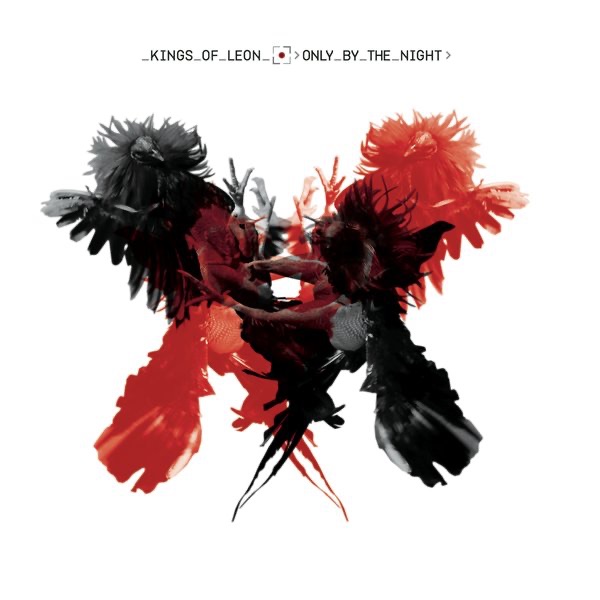
Only by the Night (2008) was the detonation. Produced with an anthemic polish that retained the emotional rawness underneath, the album delivered the radio-ready scale its two centrepiece tracks required. "Sex on Fire" became the immediate, visceral hit. "Use Somebody" went further, crossing rock, pop, and adult contemporary formats simultaneously, a crossover few rock tracks achieve without sacrificing the qualities that made them credible in the first place. That song represented a songwriting maturity the band's earlier records had hinted at without fully delivering; it was the moment the craft caught up with the ambition. Only by the Night became the band's best-selling album globally, with 7.21 million copies sold, and ranked sixth among all albums worldwide in 2008.
In the UK, the commercial milestone was equally striking. Kings of Leon became the first artist to sell 250,000 digital copies of an album there, with the record spending 58 weeks in the top 75 of the UK Official Charts. The album's crossover reach was matched by a format-straddling emotional universality reminiscent of what contemporary artists like Morgan Wallen achieve in country; even "Been By Now" demonstrates how plainspoken emotional clarity, done with precision, travels across format boundaries.
Grammy nominations beginning in 2008 confirmed something the sales numbers implied but could not alone establish: the Recording Academy recognised Kings of Leon as a mainstream cultural force, not merely a critical favourite. That distinction matters. Many indie-adjacent acts accumulate press praise without ever crossing into institutional recognition; Kings of Leon completed the transition fully.
For American audiences, the shift was overdue but decisive. US radio programmers who had ignored the early catalogue now had an unambiguous commercial hook. Only by the Night became the band's biggest domestic success by a significant margin, closing a years-long gap between their European stature and their standing at home.
Pressure, Walkoffs, and the Creative Reset (2010–2014)
The commercial peak created a trap. Come Around Sundown (2010) debuted at number one in the UK, confirming the band's arena-scale audience, but critics largely found it a lateral move rather than an advance. The songwriting leaned on the same anthemic architecture that had made Only by the Night a phenomenon, without pushing that template into new territory. Commercial success and critical stasis arrived simultaneously.
Then came Bonnaroo 2011. Kings of Leon abandoned their Bonnaroo headlining set early, citing unbearable stage conditions, a walkoff that generated immediate backlash regardless of the cause. The incident became a flashpoint that trailed the band for years and, more significantly, forced into public view the pressures that had been building internally.
A hiatus followed. Reported accounts pointed to creative exhaustion, the psychological weight of sustained commercial expectation, and friction that had developed within the family unit itself. The same tight-knit Followill dynamic that had generated creative cohesion in the early years was now amplified by the stresses of sustained fame. Brothers and cousins share stakes in a way outside bandmates do not; disagreements carry compounded personal weight. The band that had drawn strength from shared blood was discovering that shared blood also means shared pressure has nowhere to dissipate.
Mechanical Bull (2013) was a deliberate course correction. Produced with a looser, more energetic feel, it pulled back from the high-gloss stadium production and reintroduced a directness that Come Around Sundown had smoothed away. Tracks on the album signalled a band consciously reconnecting with the qualities that had earned them early credibility: raw dynamics, less-processed guitar tones, and a sense of physical momentum in the rhythm section.
The album's most important achievement was not commercial but diagnostic. Kings of Leon demonstrated a capacity to identify when their sound had become a formula, and to act on that recognition without dismantling the audience they had spent a decade building. That self-correcting instinct, rare in bands operating at arena scale where financial incentives favour repetition, would prove to be the defining characteristic of their long-term durability. The reset was credible precisely because it was earned, not cosmetic.
Reinvention and the Road to Independence (2016–2024)
The self-correction evident on Mechanical Bull carried directly into the band's next phase, though the direction shifted again. Walls (2016) was a deliberate move toward emotional directness and radio-friendly production, its cleaner contemporary sheen drawing Pitchfork's critical disapproval (a 4.5/10) while winning over fans who responded to its melodic confidence. The split reception was entirely predictable: a band that had spent years recovering grit was now polishing it back off, and critics noticed.
When You See Yourself (2021) arrived mid-pandemic and marked the band's engagement with emerging digital distribution formats, including an NFT component that attracted industry attention. The decision was not purely symbolic. It signalled that Kings of Leon were willing to engage seriously with emerging digital distribution models rather than wait for the industry to decide what those models meant. For a band already over 15 years into their career at that point, it was a notably forward-facing move.
No single pivot was arbitrary; each responded to both internal creative pressure and the external realities of sustaining a rock band across changing formats and audiences. The trajectory bears comparison to acts like OneRepublic, who spent nearly two decades calibrating arena-sized ambition against radio accessibility, though Kings of Leon's roots-inflected identity gave them a distinctly different set of constraints to navigate.
Can We Please Have Fun (2024) signalled a new phase in the band's relationship with the recording industry, arriving during a broader moment when several established artists were reassessing their label arrangements. The timing was not coincidental; 2024 saw meaningful industry movement toward artist-direct models, and Kings of Leon were positioned to move with it.
That positioning carries real weight precisely because of when it happened. More than two decades into their career, with arena-level touring infrastructure, a proven international audience, and a back catalogue spanning multiple prior albums, the band no longer needed label machinery to reach their listeners. Betting on direct audience connection at that stage is a position very few rock acts of their generation have been able to occupy. Kings of Leon had built the runway long enough to make the jump credible.
Six Albums, Six Eras: How the Sound Actually Changed
That narrative arc, from garage rawness to independent reinvention, is clearest when you map the sonic shifts album by album.
Youth and Young Manhood (2003) and Aha Shake Heartbreak (2005) represent the band at their most unfiltered. Both records carry a swampy, stormy energy that feels less constructed than excavated, drawn from lived Southern experience rather than studio craft.
Because of the Times (2007) is where the ambition becomes audible. Song structures lengthen, dynamics widen, and the arrangements breathe in ways the earlier records never allowed. "On Call" and "Fans" hint at something stadium-sized without yet committing to it. This is the album where bar-room rock became insufficient as a framework for what the band was capable of.
Only by the Night (2008) is the full pivot. Production polish replaces rough edges; choruses are engineered to carry across 60,000-seat venues. "Sex on Fire" and "Use Somebody" are the result of deliberate sonic recalibration, melodies and dynamics tuned for maximum broadcast range, and they permanently reset commercial expectations around the Kings of Leon name.
Come Around Sundown (2010) locked in that arena template without meaningfully advancing it, which critics noted and audiences mostly forgave. Mechanical Bull (2013) responded directly: looser arrangements, more guitar grit, songs that felt less managed. It was a self-diagnosis in record form, acknowledging that the polish of the previous two albums had cost them something tangible.
Walls (2016), When You See Yourself (2021), and Can We Please Have Fun (2024) form a distinct late chapter. Each album negotiates the same tension: how to remain credible to listeners who came in on Youth and Young Manhood while sustaining the commercial scale that Only by the Night built. The comparison is instructive. Much like BTS navigated the gap between artistic credibility and commercial dominance across their discography, Kings of Leon have spent their mature career managing the same structural pull. The 2024 release does not resolve that tension so much as reframe it, placing the band, for the first time, entirely in control of where the balance falls.
What Kings of Leon's Arc Reveals About Rock Longevity
What that six-album arc ultimately demonstrates is that Kings of Leon's longevity was never accidental. Each phase transition, from Tennessee gospel-road-trip origins to UK critical darlings to Grammy-recognised arena headliners to fully independent artists, reflects deliberate identity management rather than reactive drift. Bands that survive two decades typically do so by knowing which parts of their identity to protect and which to shed.
The European breakthrough before American success offers a replicable lesson. Genre-ambiguous acts with genuine indie credibility can anchor international audiences that prove far more durable than domestic radio cycles, which are inherently short-lived. In the current streaming environment, where algorithmic discovery has substantially reduced radio's gatekeeping power, this model matters more than ever. Kings of Leon built their UK audience through critical press and festival stages; today's equivalent pathways run through playlist placement and cross-border algorithmic surfacing, but the underlying principle holds.
That structural resilience was tested hardest in the years around 2010 to 2013, when creative exhaustion and public controversy arrived together. The family band dynamic, with its compounded personal stakes, gave the Followills reason to work through the friction rather than walk away, and that compulsion ultimately produced Mechanical Bull rather than a permanent split.
The 2024 independence move is best understood as a long-game reward, not a risk. Two decades of touring infrastructure, a Grammy-certified back catalogue, and an audience that has followed the band through multiple stylistic pivots mean that label machinery is no longer load-bearing. Established artists exiting major label systems in 2024 are not pioneering; they are collecting on equity built over careers. Kings of Leon were positioned to make that collect.
For listeners who want to trace this evolution song by song rather than album by album, why it endures as a question is answered most clearly at the track level. MyBesh provides detailed interpretations across the Kings of Leon catalogue, from early deep cuts on Youth and Young Manhood through to the anthemic centrepieces of Only by the Night, with editorial context that connects each era to the next rather than treating them as isolated chapters.
The Followills, Then and Now
Few rock bands of their generation have completed the full circuit: underground darlings, global breakthrough, public backlash, deliberate reset, and finally, sustained independence on their own terms. The Followills have done exactly that, across more than two decades and multiple studio albums, without losing the core audience that found them first.
Genre flexibility let them move from swampy garage rock to arena anthems without severing their critical credibility entirely. A demonstrated willingness to self-correct, most visibly on Mechanical Bull, showed audiences the band could hear when something wasn't working and act on it. And the family-forged audience relationship proved resilient enough to absorb real controversy and significant stylistic reinvention.
For listeners ready to move beyond the obvious entry points, the sequencing matters. Begin with Only by the Night to hear the band at their commercial and melodic peak; "Use Somebody" and "Sex on Fire" represent the songwriting ambition that why it endures as a quality in truly durable rock music. Then move backward to Youth and Young Manhood to hear where the rawness, the gospel-road-trip tension, and Caleb's organically rough vocal approach first took shape. From there, follow the arc forward to Can We Please Have Fun, the 2024 release that represents the band betting on their audience rather than on label infrastructure.
Each of those three reference points anchors a distinct era and unlocks the ones between them.
Explore Kings of Leon's full discography on MyBesh, where lyric interpretations, thematic breakdowns, and era-by-era analysis are available across the complete catalog. Whether you are tracing the band's roots or mapping how each album responded to the pressures of the one before it, MyBesh gives you the context to hear it properly.
Conclusion
Kings of Leon's story is ultimately one of deliberate reinvention without identity loss. Four key truths define their arc: the roots never fully disappeared, the UK breakthrough proved that geography shapes careers in unexpected ways, commercial peak and creative crisis often arrive together, and independence can restore what major label pressure erodes.
Few rock acts survive two decades by staying the same. Fewer still survive by changing as dramatically as the Followills did across multiple albums and personal crises. That they remain relevant in 2024 says something meaningful about the value of artistic honesty over trend-chasing.
The full story rewards close listening. Start with the three anchor albums outlined above, then let the discography fill in the gaps. Every era has something worth hearing on its own terms. Visit MyBesh to go deeper.