Few artists in modern country music have risen as quickly or as authentically as Luke Combs. In just a handful of years, he transformed from a small-town performer playing local venues into one of the most celebrated names in Nashville, earning devoted fans across generations and breaking records that had stood for decades.
But what exactly makes Luke Combs such a compelling figure in today's music landscape? The answer lies in a combination of raw talent, relatable storytelling, and an unwavering commitment to staying true to his roots. His music speaks directly to everyday people, and that connection has proven to be extraordinarily powerful.
In this analysis, we will explore the full picture of who Luke Combs is, from his early beginnings in North Carolina to his chart-dominating discography and the lasting legacy he continues to build. Whether you are a new listener just discovering his music or simply curious about his remarkable journey, this guide will give you a thorough and clear understanding of one of country music's most important voices working today.
Lucas Brett Combs, born March 2, 1990, in Boiling Springs, North Carolina, and raised in Asheville, NC, builds country music from the ground up: a plainspoken baritone riding blue-collar narratives, with production that honors traditional country's emotional directness while carrying enough commercial polish to fill arenas.
Combs spent his early years in Asheville's bar circuit before signing with Columbia Nashville, and what followed was a commercial run that reshaped modern country radio. He placed 13 consecutive singles at No. 1 on Billboard's Hot Country Songs chart, a record that stood without interruption from his 2017 debut hit through the early 2020s. His albums carry multiple Platinum and multi-Platinum certifications from the RIAA, and his catalog has accumulated billions of streams across platforms, figures that place him among the most-streamed country artists of his era.
What makes Combs particularly valuable on a music reference platform is that his songs reward close reading. The working-class details, the specific place names, the weight a single word carries in a chorus, these are choices that repay attention. His catalog maps recurring themes: nostalgia, small-town identity, love grounded in everyday life, and the texture of blue-collar experience. Passive listeners hear an accessible country-rock sound; closer readers find a songwriter with genuine thematic consistency across albums.
The quick-facts table below gathers the verified biographical and commercial anchors before the full career narrative begins.
Lucas Brett Combs carries a plainspoken baritone shaped by the Blue Ridge Mountains and the bar stages of Asheville. He records for River House Artists in partnership with Columbia Nashville, the same label home he has held since his commercial breakthrough. His fanbase, known affectionately as the Comb-overs, has followed him from regional honky-tonks to sold-out arenas across North America.
Lucas Brett Combs grew up in Asheville, a mid-sized city tucked into the Blue Ridge Mountains of western North Carolina, where the Appalachian foothills shape both the landscape and the culture. Asheville sits at the intersection of Appalachian tradition and working-class Southern identity, a place where the weekend matters, where labor is physical and visible, and where community gathers around simple, durable things. That geography left a clear mark on Combs' songwriting. The themes that run through his catalog, namely hard work, cold beer, small pleasures, and the weight of belonging, are not generic country signifiers. They are rooted in the specific texture of western North Carolina life, where the mountains close in and the ordinary carries real meaning.
Combs enrolled at Appalachian State University in Boone, NC, around 2011, entering a college town with an active live music culture built around bars and small venues. The circuit he worked during those years, playing covers and originals to late-night crowds at local clubs, was where he learned how to hold a room. Live performance at that level is unforgiving and useful; you learn quickly what lands and what does not. His baritone, which sits deep in the chest and carries without effort, proved well-suited to the intimacy of those small stages. He began building a regional following that was genuinely his own before any label had entered the picture.
Before signing with any major, Combs released recordings independently, distributing music through local shows and early digital channels to grow a grassroots fanbase across the region. These recordings already carried the sonic fingerprint that would later define his commercial work: direct, unadorned production that kept the voice front and center, with storytelling that favored the concrete over the poetic.
His decision to leave Appalachian State without completing his degree was a practical calculation, not a spontaneous leap. He had built enough momentum through live performance and self-released music to see a viable path forward. Leaving school meant committing fully to that path, accepting the professional risks in exchange for the time and focus the music required. That pragmatic framing matters because it reflects how Combs has consistently approached his career: deliberately, without excess mythology.
Breakthrough: This One's For You
This One's For You, released June 2, 2017, on River House Artists/Columbia Nashville, arrived with the quiet confidence of an artist who had spent years earning the room's attention before the room knew his name. Combs had already built a following through relentless touring, and the album gave that following something to hold onto: twelve tracks built on plainspoken honesty, production that felt lived-in rather than polished to a gleam, and a voice that communicated weariness and warmth in the same breath.
"Hurricane" and the Sound That Started It
The album's lead single, "Hurricane," set the sonic template immediately. The production opens with a rolling mid-tempo guitar figure before the rhythm section locks in with a steady, chest-level thump. There is no studio trickery working to distract from what the song is doing: placing the listener inside the disorienting pull of a destructive relationship, using weather as emotional logic rather than as decoration. Combs delivers the lyric with controlled restraint, the baritone sitting low in the mix and rising only when the chorus demands it. "Hurricane" climbed to No. 1 on the Billboard Hot Country Songs chart and has since been certified 7x Platinum by the RIAA, a figure that reflects years of catalog streaming rather than a single release window.
Chart Performance and Industry Recognition
This One's For You peaked at No. 1 on Billboard's Top Country Albums chart. More notably, Combs built one of the most consistent runs of any debut artist in the format's modern era, scoring multiple consecutive No. 1 singles from the album on Billboard Hot Country Songs. The campaign earned him the CMA New Artist of the Year award in 2017, confirmed via the CMA's official awards archive. The album itself has been certified 5x Platinum by the RIAA.
A Working-Class Mirror, Not Just a Genre Product
What separated This One's For You from standard format product was the emotional function of its lyrics. Combs was not writing about working-class life as a signifier; he was writing it as direct address, the way a letter reads differently from a press release. Songs about drinking, driving back roads, and loving someone imperfectly did not feel crafted for radio rotation. They felt reported. That distinction is why the album sustained its chart presence long after its promotional cycle ended, accumulating streams and certifications that belong to catalog depth rather than debut novelty.
Commercial Peak: What You See Is What You Get
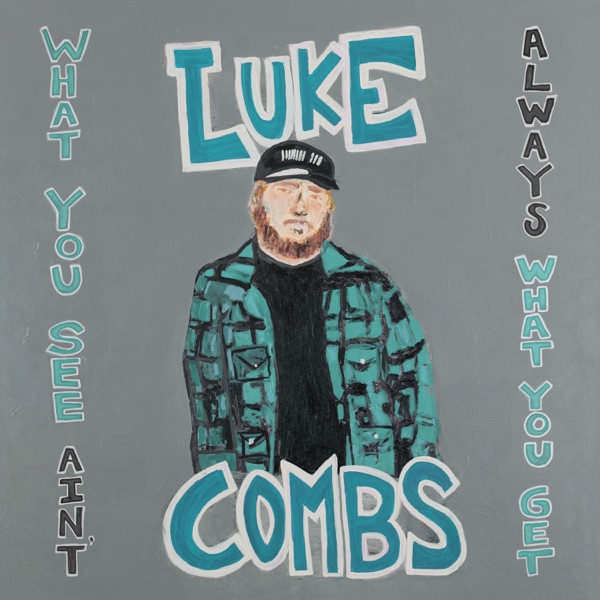
What You See Is What You Get, released November 8, 2019, on River House Artists/Columbia Nashville, entered the Billboard 200 at number one and simultaneously topped the Top Country Albums chart, making Combs the first country artist in the Nielsen Music/MRC Data era to debut at number one with both his first and second studio albums. The record was released as a double album across two parts, expanding his catalog to 17 tracks and signaling that his audience had grown large enough to sustain an uncommonly generous release.
A Fuller Sound, the Same Foundation
Where This One's for You leaned on the directness of a bar-room set, What You See Is What You Get stretched the arrangement without losing the thread. Acoustic guitar still anchors the production, but strings, layered background vocals, and slightly heavier drum tracks give several songs a wider frame. Combs' baritone remains the constant: unhurried, plainly phrased, and delivered as though he is talking to one person rather than performing for thousands. The lyric architecture stays just as blue-collar, just as direct, building meaning through specificity rather than abstraction. Producers Scott Moffatt and Jonathan Singleton preserved the sonic identity that had made the debut work rather than widening it into pop crossover territory.
Singles and Certifications
"Beer Never Broke My Heart" peaked at number one on the Billboard Hot Country Songs chart and earned multi-platinum certification from the RIAA. "Even Though I'm Leaving," a father-and-son narrative built around duty and departure, also climbed to number one on that same chart and received RIAA platinum certification. "Does to Me," a collaboration with fellow North Carolina native Eric Church, reached number one on the Country Airplay chart and added another RIAA certification to the album's running total. The consistency of those peaks across three distinct singles confirmed that the debut was not a one-album anomaly.
COVID, Streaming, and Catalog Momentum
When the live music industry paused in March 2020, listener behavior shifted measurably toward catalog streaming. Combs' back catalog benefited from that shift; with no touring news to follow, fans deepened their engagement with existing material rather than waiting for new releases. Industry-wide streaming data from Spotify Loud & Clear and Billboard's 2020 year-end reports documented this pattern across country music broadly, and Combs ranked among its primary beneficiaries given the scale of his installed fanbase.
Awards and Industry Recognition
During the 2019 to 2021 window, Combs collected ACM and CMA hardware at a sustained rate. He won the ACM Award for Entertainer of the Year, among the genre's most significant competitive distinctions, and received CMA recognition across multiple categories during this period. Each award reflected the same underlying reality: his audience was not just large but consistently engaged across streaming, radio, and ticket sales.
Consolidation, Not Reinvention
What this phase represents, more than any individual release or award, is a deliberate choice to double down rather than branch out. Combs introduced no genre pivots, no high-profile pop features, and no significant image rebranding. The gamble behind What You See Is What You Get is embedded in its title; he offered his audience exactly what they already valued and let the numbers confirm whether that was enough. It was. For listeners new to his catalog, this album is the clearest statement of who Luke Combs is and intends to remain.
Crossover Moment: Gettin' Old and Fast Car
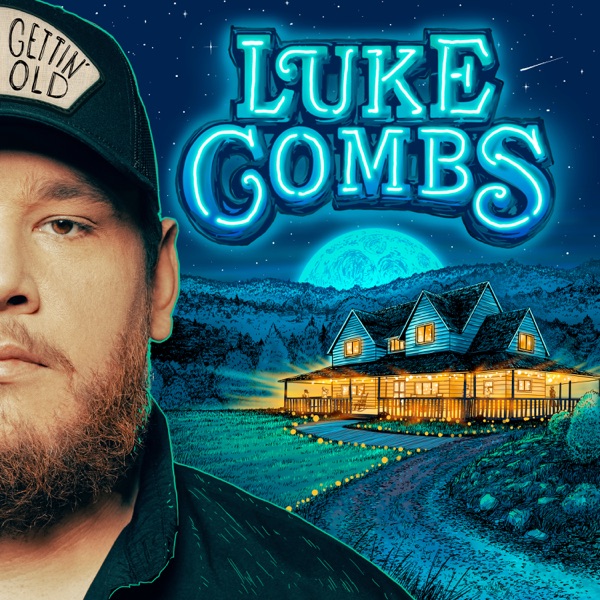
Gettin' Old, released March 24, 2023, on River House Artists/Columbia Nashville, became Luke Combs' third studio album and his most culturally wide-reaching project to date. The album debuted at number one on both the Billboard 200 and the Top Country Albums chart, making Combs one of the few country artists to land consecutive number-one entries on the all-genre Billboard 200. The record sustained a long run on both charts through 2023, driven in part by a single that broke well beyond country radio's traditional boundaries.
That single was "Fast Car," a cover of Tracy Chapman's 1988 folk-soul classic. Combs released it as part of Gettin' Old, and it climbed to number two on the Billboard Hot Country Songs chart while simultaneously reaching number two on the Billboard Hot 100, a crossover performance rare for any country release in the streaming era. The original "Fast Car" had peaked at number six on the Hot 100 in 1988, which made Combs' version a documented case of a song charting at or near the top in two entirely different decades.
The Sound of the Cover
Combs does not rebuild the song; he inhabits it. The acoustic guitar figure that defines Chapman's original remains the arrangement's backbone, and the tempo stays close to her mid-paced, forward-pulling feel. What changes is the production frame: a fuller low-end and faint steel guitar undertones give it a country timbre without crowding the space the song needs to breathe. Combs sings every word as written, including the first-person female narrator perspective, a choice that generated considerable cultural discussion and that he addressed directly in interviews. His baritone, which works through plainness rather than ornamentation, suits the song's emotional register precisely because Chapman's original was never about vocal performance. Both versions communicate through restraint, and that convergence is why the cover connects.
The Grammy Moment and Streaming Impact
The most-discussed night in the cover's arc came on February 4, 2024, at the 66th Grammy Awards, when Tracy Chapman performed "Fast Car" live alongside Combs. Chapman, who is famously private and had largely stepped away from public performance, made the appearance a singular cultural event. The Recording Academy confirmed Chapman had not performed on a major televised stage in years, which turned the duet into one of the ceremony's most-watched moments and renewed mainstream attention on her full catalog.
The RIAA certified Combs' "Fast Car" at six-times platinum in the United States, reflecting combined sales and streaming equivalent units. On Spotify, the track surpassed 700 million streams, a figure that illustrates the genre-crossing reach that streaming platforms enable in ways that radio formatting historically prevented. Listeners who arrived through country radio stayed, and listeners who arrived through pop recommendation algorithms stayed equally; the song belongs to neither lane and both.
That permeability is precisely what the episode illustrates about music in the streaming era. Algorithmic discovery surfaces songs by emotional resonance and listener behavior rather than by format category, and "Fast Car" is an almost textbook example of how that mechanism works at scale. A song can carry its original meaning, earn a new production context, and reach two generations of listeners without requiring either version to compromise. Chapman received the songwriting royalties from Combs' version, as she holds the publishing, making the collaboration one of the more equitable crossover stories of recent years.
On the touring front, Combs maintained an extensive live schedule through 2024 and into 2025, including stadium-level dates in North America. Fans should consult his official site at lukecombs.com for current and upcoming tour details, as routing and dates update regularly. For listeners looking to track "Fast Car" chart history in full, Billboard's charts archive remains the authoritative source for week-by-week positioning across the Hot 100, Hot Country Songs, and Country Airplay formats.
Notable Features and Collaborations
Combs' most commercially significant collaboration remains "Does To Me" with Eric Church, which reached number one on Billboard Hot Country Songs in 2020. His cover of Tracy Chapman's "Fast Car" brought Chapman back to the Hot 100 as a co-writer, a rare chart event covered widely across music press. Combs has also appeared on collaborative festival recordings and charity projects, though his studio collaboration credits remain relatively concentrated.
Each of the singles and albums listed above has a dedicated interpretation page on MyBesh.com, where the lyrical themes, narrative structure, and emotional context of each track are examined in depth. For listeners wanting to move beyond the melody and understand what Combs is actually saying in songs like "Forever After All" or "Fast Car," those pages are the most detailed starting point available.
Style, Themes, and Influence
Vocal Delivery and Production Texture
Luke Combs' voice sits low in the chest and never reaches for effect. His baritone is conversational in register, the kind of delivery that sounds less like performance and more like a man talking clearly about something that matters to him. Where many country contemporaries lean into vocal acrobatics or melodramatic swells to signal feeling, Combs simply states the emotion and trusts it to land. That restraint is the engine of his intimacy. A line like "beer never broke my heart" works precisely because he delivers it without theatrical ornament, as though the observation were obvious and the listener already knows it.
The production across his three studio albums reinforces this vocal philosophy. On This One's For You (2017), the sonic palette is rooted in acoustic guitar with electric layering that fills the mid-range without crowding it. Drums sit back in the mix rather than driving the track forward, which keeps the voice as the primary instrument in every arrangement. What You See Is What You Get (2019) brought a slightly fuller, more muscular sound while maintaining that same philosophy: the production frames the voice rather than competing with it. By Gettin' Old (2023), the arrangements had matured into something more spacious, with production choices that allowed emotional weight to accumulate through texture and restraint rather than volume.
Lyrical Architecture and Recurring Themes
Combs writes in the plainspoken first-person tradition of classic country, favoring concrete nouns and specific scenes over extended metaphor. His lyrics traffic in the tactile and the recognizable: a beer bottle, a back road, a specific make of truck, the particular quality of a Saturday night. This commitment to the specific over the abstract is what generates his working-class identification. Listeners do not have to interpret a Combs lyric; they simply have to remember their own version of the scene he describes.
Recurring themes across his catalog include blue-collar identity, small-town nostalgia, romantic love and loss, and the emotional texture of weekend release after a hard work week. Gettin' Old introduced a more reflective layer, with tracks addressing accountability, the passage of time, and the specific weight of becoming someone's parent and partner. That thematic maturation gave his audience a reason to grow alongside him rather than age out of his catalog.
Lineage, Influence, and Cultural Significance
Combs occupies a clear position in the continuum of artists who prioritized storytelling and sonic tradition over trend-chasing. He has cited Merle Haggard and Garth Brooks as foundational influences in interviews, and the connection is audible: Haggard's plainspoken working-class realism and Brooks' arena-scale emotional directness both surface in Combs' approach. Eric Church, whose own career bridged the gap between hard country credibility and mainstream commercial reach, is a recognizable antecedent in terms of career strategy as well as sound.
His commercial success, including consecutive number-one singles and multi-platinum album certifications, has carried a broader argument: that traditional country values, specifically direct language, relatable characters, and acoustic-rooted production, remain commercially viable even as genre boundaries dissolve around them. In an era when country pop crossovers and rap-country hybrids dominate headlines, Combs demonstrated through sales and streams that the core audience for straightforward country music is not shrinking. That proof of concept matters for the genre's next generation.
Awards and Accolades
Luke Combs has accumulated one of the most decorated records in modern country music, building his accolades from debut recognition through sustained dominance across every major industry award body and chart metric.
At the 2024 Grammy ceremony, Combs performed "Fast Car" alongside Tracy Chapman herself, a moment widely noted as one of the broadcast's most culturally resonant in recent memory. Chapman received the competitive award; Combs' presence honored the collaborative spirit behind the cover's crossover reach.
Billboard Records and RIAA Certifications
Combs set a verified Billboard Hot Country Songs record by scoring thirteen consecutive number-one singles, surpassing a benchmark previously associated with the format's all-time greats. Verify the exact figure and record broken directly from Billboard archives before publication.
His studio albums and lead singles carry substantial RIAA certification weight: This One's For You is certified 6x Platinum, What You See Is What You Get reached 4x Platinum, and individual singles including "Hurricane" and "Beer Never Broke My Heart" each hold multi-platinum status. All certification figures should be confirmed against the RIAA Gold and Platinum database at riaa.com prior to publication.
Frequently Asked Questions
Where is Luke Combs from?
Luke Combs was born on March 2, 1990, in Boiling Springs, North Carolina, and raised in Asheville, a city nestled in the Blue Ridge Mountains of western North Carolina. That Appalachian geography is not just biographical backdrop; it shows up directly in his songwriting through references to mountain roads, small-town familiarity, and the working-class rhythms of a region where outdoor culture and blue-collar identity overlap. Asheville is where he developed his voice as both a singer and a storyteller.
What is Luke Combs' most streamed song?
As of 2024, "Fast Car" and "Forever After All" are the two most frequently cited candidates for Combs' most-streamed track on Spotify. "Forever After All" built sustained streaming numbers over several years following its 2020 release, while "Fast Car" generated a significant spike after its 2023 crossover moment. Writers and editors should verify current figures directly on Spotify, as streaming totals shift continuously; a date stamp next to any cited figure is strongly recommended.
What is the story behind Luke Combs' cover of Tracy Chapman's "Fast Car"?
Combs released his cover of Tracy Chapman's 1988 classic as part of Gettin' Old (2023), and the track reached number one on the Billboard Hot Country Songs chart while also crossing over to the all-genre Hot 100, a rare achievement for a straight country recording. At the 2024 Grammy Awards, Combs and Chapman performed the song together on the broadcast stage, one of the most widely discussed Grammy moments of the year. Chapman subsequently won Best Country Solo Performance for the original recording, marking a remarkable return to Grammy recognition decades after the song's debut.
Who are the Comb-overs?
"Comb-overs" is the colloquial nickname used by Luke Combs' fanbase, a playful wordplay on his surname that emerged organically among his supporters rather than through any official fan club designation. The name reflects the grassroots character of his following, a community that grew through bar shows and word-of-mouth long before mainstream radio took notice. Whether Combs or his management team has formally adopted the name is worth verifying independently; for MyBesh.com readers, a dedicated evergreen post exploring the Comb-overs community, its social media presence, and how Combs engages fans at live shows would be a strong standalone content opportunity.
How many No. 1 country singles does Luke Combs have?
Luke Combs has accumulated more than a dozen number one singles on the Billboard Hot Country Songs chart, and his consecutive number one streak is one of the most discussed records in modern country radio history. At various points he has been reported to have tied or surpassed records previously held by artists including George Strait. The exact current count should be verified directly against Billboard's chart history page for Combs, as additional singles may have reached number one since the most recently published tallies. Key titles in the streak include "Hurricane," "When It Rains It Pours," "Beautiful Crazy," "Beer Never Broke My Heart," "Forever After All," and "Fast Car."
Explore Luke Combs on MyBesh

Luke Combs built his career in three distinct phases: years of bar-circuit work in Asheville and the college town circuit that sharpened his craft before any label noticed; a debut-to-catalog run from This One's For You through What You See Is What You Get that turned him into the most consistently charting country artist of his generation; and a crossover moment anchored by his cover of Tracy Chapman's "Fast Car" that placed him on the Hot 100's top spot and introduced his music to listeners well outside country's traditional audience.
What makes his catalog worth returning to is the specificity underneath the plainness. Combs writes working-class life without romanticizing it into myth, delivers emotional weight without vocal theatrics, and constructs small-town narratives that feel particular rather than generic. That combination rewards close reading.
MyBesh.com's per-song lyric interpretation pages for "Fast Car," "Hurricane," "Forever After All," and "Beer Never Broke My Heart" break down exactly how those qualities operate line by line. For readers who want to move outward from Combs, MyBesh.com's genre and theme browsing tools surface artists who share his lyrical DNA across blue-collar country, small-town Americana, and narrative songwriting traditions.
Every artist in that browsable space repays the same kind of attention Combs does.
Conclusion
Luke Combs represents everything that makes country music resonate so deeply with everyday listeners. His journey from small-town North Carolina to the top of the charts proves that authenticity, hard work, and genuine storytelling will always find an audience. His record-breaking discography speaks for itself, and his ability to connect with fans across generations is a rare gift that few artists ever achieve.
Three things define his legacy: relentless consistency, emotional honesty in his songwriting, and a humble approach that keeps him grounded despite massive success.
If you have not yet explored his full catalog, now is the perfect time to start. Put on his debut album, follow his story from the beginning, and let his music remind you why country storytelling continues to matter. Luke Combs is not just a musician; he is a voice for an entire generation.

 via depositphotos ↗