
30-sec preview
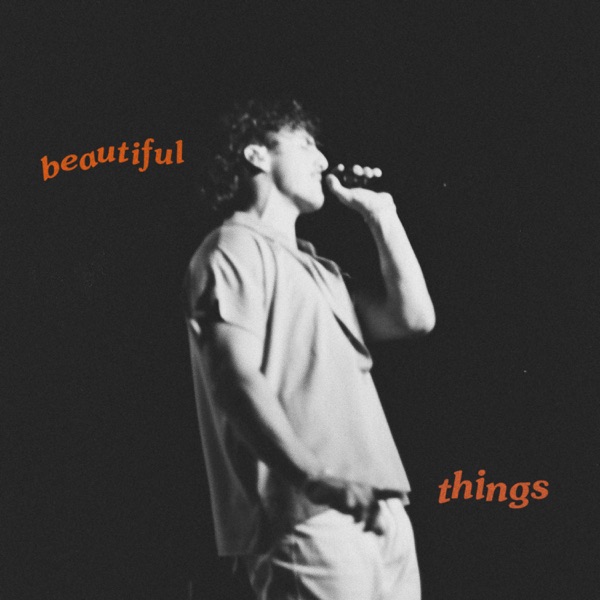
2024 · From the album Beautiful Things - Single
Beautiful Things
by Benson Boone
The reading
A prayer of gratitude that curdles into panic, sung by someone who finally has a good life and cannot stop bracing for it to disappear
02 · Interpretation
Benson Boone's 'Beautiful Things': Gratitude with a Knot in Its Stomach
Benson Boone released 'Beautiful Things' in January 2024, and within weeks it had vaulted up streaming charts around the world on the strength of one structural trick: it sounds like two different songs welded together. The verses are soft, almost folk-confessional. The chorus erupts into something closer to a panic attack set to rock dynamics. That switch is not just a hook; it is the song's argument.
The opening verse is a quiet inventory of recovery. Things were rough for a while, the singer says, but the last few Decembers are behind him. He sees his family monthly. He has found a partner his parents like. She stays over. He thinks he might, finally, have it all. None of this is dramatic on the page. It reads like the kind of stocktaking someone does in their head on a good morning, almost surprised to find the column adds up.
The pre-chorus introduces the complication. He thanks God for the girl, then immediately remembers the terms of the deal: what is given can be taken back. The line about being the most terrified man because he stands to lose her flips the gratitude on its edge. Love, in this framing, is not a reward for surviving the bad years. It is a new and larger thing to be afraid of losing.
Then the chorus blows the doors open. The volume jump and the strained, almost yelped delivery do the emotional work the verses would not allow. The words themselves are simple to the point of childlike: please stay, I want you, I need you, don't take. There is no metaphor, no clever turn. It is the sound of someone praying badly, which is to say honestly, with no time to dress the request up.
The second verse is where the song shows what it actually understands about itself. He says he has found his mind and is feeling sane, that his faith is returning. Then he asks the question the whole track is built around: if everything is good and great, why does he sit and wait until it is gone? That is not a rhetorical flourish. It is a recognisable habit of mind for anyone who has come through a stretch of depression or instability, the reflex of treating happiness as a countdown rather than a state. He lists what he has, peace and love, and then admits he lies awake convinced he will lose all of it.
That self-awareness is what keeps the song from being just a love song or just a worry song. The singer is not naive about what he is doing. He knows the catastrophising is the problem, not the future. But knowing does not stop it, which is why the chorus has to keep returning, louder each time, like an intrusive thought that will not be reasoned with.
Why it connected
The production helps. The acoustic-into-arena arc gives listeners a clean emotional contract: tender setup, full-throated release. It sits in a lineage of male singer-songwriter ballads (Hozier, Lewis Capaldi, early Imagine Dragons) that trade in spiritual vocabulary without committing to a specific theology. The God of 'Beautiful Things' is less a doctrinal figure than a name for whatever force handed the singer his current life and might, at any moment, ask for it back.
For a debut-era single from a young artist, it is also a slightly unusual emotional posture. Pop songs about new love tend to be celebratory or doomed. This one is grateful and pre-emptively grieving at the same time, which is closer to how the feeling actually works for people who have lost things before. That recognisability, more than the big chorus, is probably why the song lingered on playlists long after its viral moment ended.
03 · Lyrics
"Beautiful Things"
For a while there, it was rough
But lately, I've been doin' better
Than the last four cold Decembers
I recall
And I see my family every month
I found a girl my parents love
She'll come and stay the night
And I think I might have it all
And I thank God every day
For the girl He sent my way
But I know the things He gives me
He can take away
And I hold you every night
And that's a feeling I wanna get used to
But there's no man as terrified
As the man who stands to lose you
Oh, I hope I don't lose you
Mm
Please stay
I want you, I need you, oh God
Don't take
These beautiful things that I've got
Please stay
I want you, I need you, oh God
Don't take
These beautiful things that I've got
Oh-oh-oh-oh
Ooh
Please don't take
I found my mind, I'm feelin' sane
It's been a while, but I'm finding my faith
If everything's good and it's great
Why do I sit and wait 'til it's gone?
Oh, I'll tell ya, I know I've got enough
I've got peace and I've got love
But I'm up at night thinkin'
I just might lose it all
Please stay
I want you, I need you, oh God
Don't take
These beautiful things that I've got
Oh-oh-oh-oh
Ooh
Please stay
I want you, I need you, oh God
I need
These beautiful things that I've got
Lyrics via Google. Copyright belongs to rights holders.
04 · FAQ
Frequently asked
What does Benson Boone mean by 'beautiful things' in the song?
Why does 'Beautiful Things' switch from soft verses to a loud chorus?
Is 'Beautiful Things' a religious song?
What does the line about 'four cold Decembers' refer to?
Why does the singer say he sits and waits until everything is gone?
How did 'Beautiful Things' become such a big hit in 2024?
05 · Discography