
30-sec preview
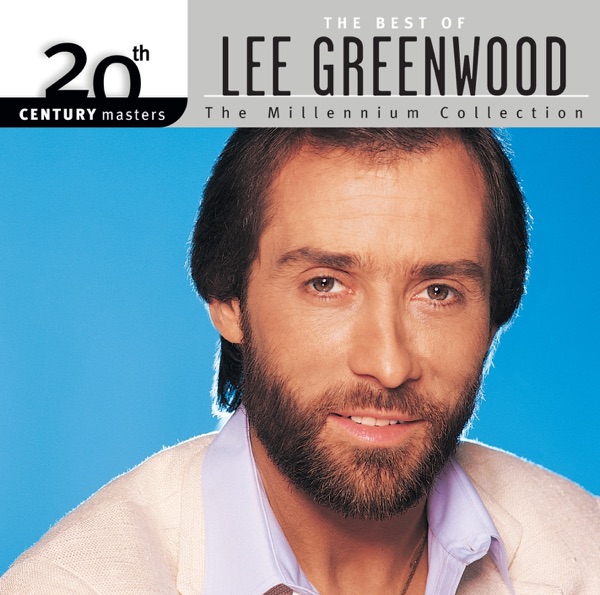
1984 · From the album 20th Century Masters - The Millennium Collection: Best of Lee Greenwood
God Bless The U.S.A.
The reading
A country singer's pledge that even stripped of everything he owns, the mere fact of being American would still feel like a windfall worth defending
02 · Interpretation
The Patriotic Hymn That Refused to Fade: Inside Lee Greenwood's 'God Bless the U.S.A.'
Lee Greenwood released "God Bless the U.S.A." in 1984, deep into Ronald Reagan's first term and in the middle of a country music boom that leaned hard into flag imagery and traditional values. What sets the song apart from the era's other patriotic material is its opening gambit. Greenwood does not start with a parade or a monument. He starts with ruin.
A hypothetical that reframes everything
The first verse asks the listener to picture losing a lifetime of work overnight, with nothing left but a spouse and children. That is an unusual place to begin a patriotic song. It sounds closer to a country lament about hard times than a civic hymn. The payoff comes in the next lines: even in that scenario, Greenwood says he would still count himself lucky, because "the flag still stands for freedom." The verse is essentially an argument. It tries to prove that American citizenship is worth more than any possession by stripping away the possessions first.
That framing is what distinguishes the song from generic flag-waving. The pride is conditional on nothing. It is meant to survive worst-case scenarios.
The chorus as a pledge, not a boast
The refrain moves from gratitude to obligation. Greenwood is "proud to be an American," but the line that carries the weight is the promise to remember "the men who died / who gave that right to me." The song is not celebrating freedom in the abstract; it is tying freedom to a specific debt owed to the war dead. That is why the song became standard at military funerals, Memorial Day ceremonies, and veterans' events almost immediately.
The hedge "at least I know I'm free" is easy to miss. It concedes that other things may be imperfect while insisting the baseline is intact. The chorus then pivots to a promise to "stand up next to you," turning the listener into a comrade rather than an audience. The song recruits as it sings.
The map verse
The second verse is a geography lesson delivered as communion. Minnesota lakes, Tennessee hills, the Texas plains, the familiar "sea to shining sea" borrowed from "America the Beautiful," then a pivot to cities: Detroit, Houston, New York, L.A. The move from landscapes to metropolises is deliberate. It stitches rural and urban America into one constituency, which is exactly the unified audience the chorus then addresses. Whether the stitch is convincing is a matter of politics; that the song attempts it at all is part of why it has traveled.
Why it keeps coming back
"God Bless the U.S.A." was a modest country hit on first release, but it re-charted after the 1991 Gulf War and again, more prominently, after the September 11 attacks in 2001. Each resurgence followed the same pattern: a national shock sent people searching for a song that treated the country as something worth mourning for and recommitting to. Greenwood's melody is slow enough to function as a hymn and simple enough to sing in a crowd, which is most of what a civic anthem needs to do.
The song has also been a lightning rod. Critics hear it as uncritical nationalism, a soundtrack for political rallies that elides any discussion of what freedom costs those on the receiving end of American power. Admirers hear a working-class prayer: gratitude from someone who assumes he could lose everything and has decided in advance how he will respond.
Both readings are available in the lyric, which is part of why it endures. The song does not argue policy. It stakes a personal position, repeats it until it sounds like a vow, and leaves the listener to decide whether to join in. Four decades on, enough people still do that it functions less like a pop song than like a liturgy with a key change.
Themes catalogued
03 · Lyrics
"God Bless The U.S.A."
If tomorrow all the things were gone
I worked for all my life
And I had to start again
With just my children and my wife
I'd thank my lucky stars
To be livin' here today
'Cause the flag still stands for freedom
And they can't take that away
And I'm proud to be an American
Where at least I know I'm free
And I won't forget the men who died
Who gave that right to me
And I'd gladly stand up
Next to you and defend her still today
'Cause there ain't no doubt I love this land
God bless the USA
From the lakes of Minnesota
To the hills of Tennessee
Across the plains of Texas
From sea to shining sea
From Detroit down to Houston
And New York to L.A.
Well, there's pride in every American heart
And it's time we stand and say
That I'm proud to be an American
Where at least I know I'm free
And I won't forget the men who died
Who gave that right to me
And I'd gladly stand up
Next to you and defend her still today
'Cause there ain't no doubt I love this land (love this land)
God bless the USA
And I'm proud to be an American
Where at least I know I'm free
And I won't forget the men who died
Who gave that right to me
And I'd gladly stand up
Next to you and defend her still today
'Cause there ain't no doubt I love this land (love this land)
God bless the USA
Lyrics via Google. Copyright belongs to rights holders.
04 · FAQ