
30-sec preview
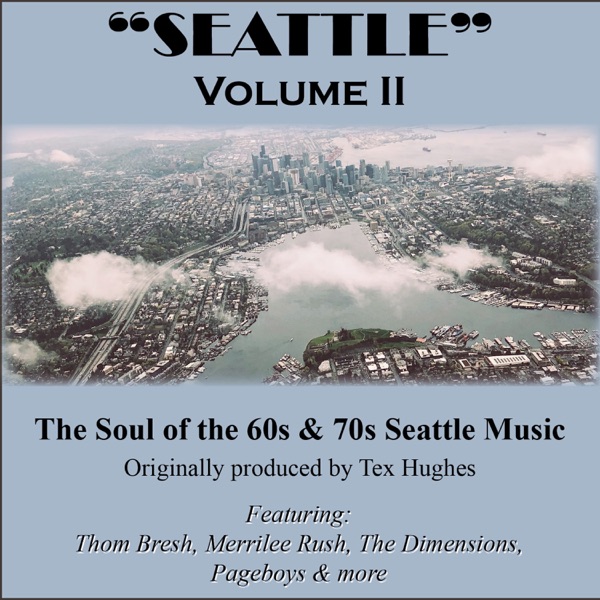
2010 · From the album Seattle (Volume 2)
Lovers Never Say Goodbye
The reading
A tender promise exchanged at a parting, insisting that real love refuses the finality of 'goodbye' in favor of 'so long'
02 · Interpretation
Merrilee Rush, 'Lovers Never Say Goodbye': The Comfort of a Smaller Word
The song is a parting scene set to music. Two people have to separate, the reason is not named, and the speaker is doing the work of keeping both of them from falling apart on the way out the door. The emotional strategy is linguistic: refuse the word that sounds final, pick a word that sounds temporary.
Merrilee Rush is best known for the 1968 hit 'Angel of the Morning,' and her voice carries much of the same quality here, a controlled sweetness that keeps sentiment from spilling into melodrama. This 2010 recording, released on the regional compilation 'Seattle (Volume 2),' sits late in her career, decades after her chart peak. Heard in that light, a song about reassuring someone that a separation isn't an ending takes on an extra layer the lyrics themselves don't spell out.
The opening promise
The first verse is a request and a vow stacked together: wait for me, I will come back, my love will keep burning in the meantime. There is no scene-setting, no explanation of why the lovers have to part. The song isn't interested in the circumstance. It only cares about the handling of the moment. By skipping over the reason for the separation, the lyric becomes portable: it fits a soldier shipping out, a traveling partner, a long-distance arrangement, anyone standing on a platform or a doorstep.
The hinge
The chorus is where the song makes its argument. Parting is acknowledged as real; crying is gently waved off; and then the key move, substitute 'so long' for 'goodbye.' The claim that "lovers never say goodbye" isn't a factual statement about the vocabulary of couples. It's a small superstition the speaker is building in real time, a way of insisting that the word you choose has power over what happens next. Say the final word and you make it final. Say the casual one and you leave the door open.
The middle verse
The bridge-like second verse widens the stakes. Loving the other person more than life itself is a conventional phrase, but the line that follows twists it into something more interesting: hurting you would only be hurting myself. That is less a romantic flourish than a definition. The speaker is saying the two of them are, at this point, one circuit; damage to one is damage to the other. It's also a quiet reassurance that whatever is pulling them apart, it isn't the speaker's intent to wound.
The request that follows is physical and simple: kiss me, hold me tight, know this isn't our last time. The song keeps returning to the same reassurance in different registers, verbal, physical, grammatical. Each verse is another angle on the same promise.
The repetition at the end
The closing "never say goodbye, goodbye, goodbye" is doing something sly. The word the song has spent three minutes refusing to speak is suddenly repeated three times. It could be read as the mask slipping, the speaker finally admitting the word that has been looming over the whole scene. It could also be read as a kind of exorcism, saying the dangerous word out loud now that the vow is in place to neutralize it. Either reading works, and the ambiguity is part of why the ending lands.
Why it lingers
This is a small song with a modest ambition. It isn't trying to reinvent the farewell ballad; it is working inside a tradition that stretches back through midcentury pop standards about partings, promises, and waiting. What keeps it alive is the specificity of its central gesture. Most breakup and parting songs reach for grand imagery. This one reaches for a word substitution, and trusts that listeners who have ever stood at a door not wanting to use the final word will recognize the trick immediately.
Themes catalogued
03 · Lyrics
"Lovers Never Say Goodbye"
Please wait for me
For I shall return
My love for you
Will forever burn
Though we must part
There's no reason to cry
Just say, "So long"
Lovers never say goodbye
I love you, my darling
More than life itself
I wouldn't try to hurt you
For I'd only be hurting myself
Just kiss me, dear
And hold me tight
Oh, you know
This is not our last time
Though we must part
There's no reason to cry
Just say, "So long"
Lovers never say goodbye
Never say goodbye, goodbye, goodbye
Lyrics via Google. Copyright belongs to rights holders.
04 · FAQ