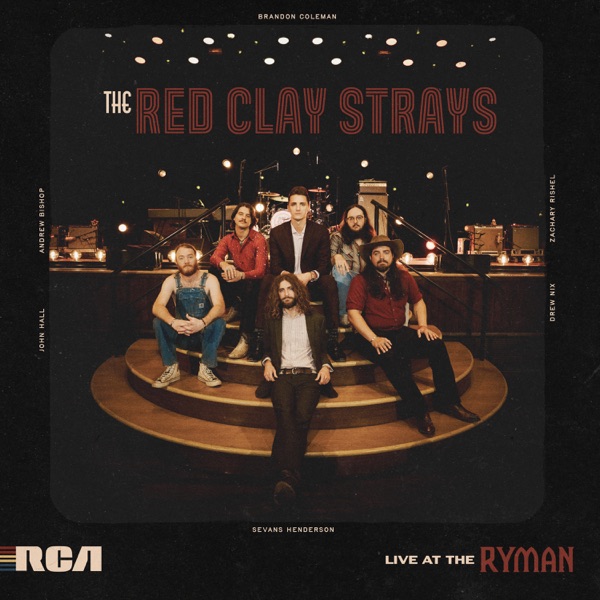

30-sec preview
2026 · From the album Grateful
Demons In Your Choir
The reading
A plea to someone who's been pulled into a circle of false friends that flatter their worst instincts, sung from the helpless distance of someone who can see the wreckage coming
02 · Interpretation
The Red Clay Strays' 'Demons In Your Choir': A Warning Set to Gospel Cadence
The song works as a one-sided conversation with someone who has drifted into the wrong crowd and stopped recognizing it as the wrong crowd. The narrator is not angry; he is exhausted and a little frightened, which is what gives the track its weight.
The opening address, calling the listener "darlin'" and asking why they listened, sets the tone of intimate frustration. This is not a stranger's lecture. It is someone close enough to use a term of endearment while delivering a hard truth: the voices around you are not your friends, and the life you are not living right now is the cost. The second verse sharpens the warning into something closer to scripture. The devil, the song suggests, advertises with "bright and shiny things," and the next two lines extend that logic into a small, memorable couplet: a place is not holy just because it feels good, and a thing is not angelic just because it has wings. That is the song's clearest thesis. Comfort and glamour are not proof of virtue.
The choir as a counterfeit church
The central image is brilliant precisely because it is so country-gospel. A choir is supposed to be a community of voices lifted toward something good. Here it is inverted: the subject has joined a choir, but the singers are liars and the songs they are "playing" are the listener's "worst desires." In other words, these companions do not introduce new vices; they amplify the ones already present. They harmonize with the part of you that wants to ruin yourself. The narrator's offer, that maybe he could save them if he could pull them from the fire, is conditional and uncertain. He does not promise rescue. He promises only that rescue is the thing he would attempt.
The bridge tightens the screws. The subject is now "as lonely as you've ever been," which is the song's most devastating observation: the crowd that was supposed to be company has produced isolation. The warning that they will "kill you in your sleep" is hyperbolic in the country-song tradition, but it lands because the verse has earned it. Bad influence is being framed not as a moral failure but as a slow-motion attack.
The narrator's helplessness
What keeps the song from being sanctimonious is the stretch where the speaker turns the camera on himself. He wishes the subject knew what they deserved. He wishes he could give them what they need. He predicts they will wake up one day and wonder why they ever left. He cannot make any of that happen. The song is honest about the fact that love does not override another person's choices, and that the most you can sometimes do is name what you see and hope they hear it.
The repetition in the final minute, the chorus circling back with backing vocals murmuring "save ya, save ya," works less like a hook than like a prayer that has stopped expecting an answer. The line is no longer an argument; it has become a refrain the singer cannot put down.
Why it lands
The Red Clay Strays have built their following on this exact register: Southern rock and country gospel filtered through a vocal style that treats earnest concern as a legitimate subject for a rock song. "Demons In Your Choir," arriving on 2026's "Grateful," fits comfortably alongside the band's earlier material about temptation and the people who hand it to you. The metaphor of the choir is doing the heavy lifting; you don't have to share the song's religious vocabulary to recognize the dynamic it is describing, which is anyone who has watched a friend disappear into a flattering circle that does not love them back.
It endures, if it does, because almost everyone is somewhere in this song. You have been the one warned, or you have been the one warning, or you have caught yourself humming along with a choir you should have walked out on a year ago.
Themes catalogued
03 · Lyrics
"Demons In Your Choir"
Darlin', why'd you go and listen?
They ain't got nothing good to say
Now there's so much life you're missing
So-called friends led you astray
You know the devil keeps his company
With all his bright and shiny things
It ain't a church just 'cause it feels good
It ain't an angel 'cause it's got wings
You've been singing with the liars
And they're playing your worst desires
If I could pull you from the fire
Then maybe I could save you
From those demons in your choir
Now you're as lonely as you've ever been
Just like the company you keep
You gotta stop lettin' 'em tear you down now
'Fore they kill you in your sleep
I wish you knew what you deserved (oh, yeah)
I wish I could give you what you need (oh, yeah)
You're gonna wake up and you'll wonder (oh, yeah)
Why did you ever leave
You've been singing with the liars
And they're playing your worst desires
If I could pull you from the fire
Maybe I could save you
From these demons in your choir (save ya, save ya)
From these demons in your choir
You've been singing with the liars
And they're playing your worst desires
If I could pull you from the fire
Then maybe I could save you
From these demons in your choir (save ya, save ya)
From these demons in your choir (save ya, save ya)
From these demons in your choir (save ya, save ya)
From these demons in your choir (save ya, save ya)
From these demons in your choir
Lyrics via Google. Copyright belongs to rights holders.
04 · FAQ
Frequently asked
What does 'demons in your choir' actually mean in the Red Clay Strays song?
Who is the narrator singing to in 'Demons In Your Choir'?
What do the lines about churches and angels mean in the song?
How does 'Demons In Your Choir' fit on the Red Clay Strays' 'Grateful' album?
Is the line 'they're playing your worst desires' about addiction?
Why does the narrator say 'maybe I could save you' instead of promising to?
What makes 'Demons In Your Choir' feel like a gospel song even when it isn't one?
05 · Discography