
30-sec preview
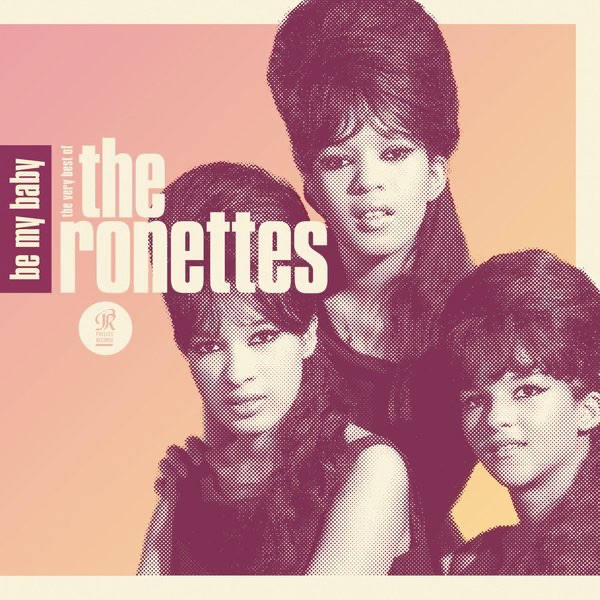
1963 · From the album Be My Baby: The Very Best of The Ronettes
Be My Baby
by The Ronettes
The reading
A teenage girl's public, all-in proposition to a boy she just met, sung as if the whole future depends on his answer
02 · Interpretation
The Ronettes' 'Be My Baby': A First-Night Vow, Cast in Wall of Sound
The song opens with one of the most recognizable drum figures in pop, but the lyric it introduces is smaller and more intimate than the arrangement suggests. A girl is speaking to a boy she has just met. She has already decided.
A proposition, not a daydream
What separates "Be My Baby" from the ocean of early-sixties boy-meets-girl records is that the singer is not pining or wondering. She is negotiating. The first verse establishes the encounter ("The night we met I knew I needed you so") and immediately moves to terms: if given the chance, she will not let him go. Then comes the ask, phrased as a polite imperative, "won't you say you love me," followed by what she is offering in return, that she will make him proud and that heads will turn wherever they walk.
That last detail matters. This is not a private romance; it is a couple imagined in public, watched and admired. The fantasy is social as much as emotional, which fits a song aimed at teenagers who lived their crushes in hallways and at dances, not in isolation.
The bargain in the second verse
Verse two escalates the offer. For every kiss he gives, she promises three. She claims to have been waiting since the day she saw him, a small contradiction with the opening line (they only just met) that reads less as a mistake than as the way infatuation actually talks: time collapses, and a first meeting feels like the end of a long wait. The closing pledge, adoration "'til eternity," is the kind of vow that only makes sense inside the emotional weather the song is generating.
What the chorus is doing
The chorus is almost entirely a single request repeated with tiny variations: be my baby, be my little baby, be my darling, be my baby now. The backing Ronettes answer each line with "be my, be my baby" and "my one and only baby," turning the plea into something closer to a chant. The repetition is not filler. It is the sound of someone who has decided and is waiting, out loud, for the other person to catch up. By the final minute the lyric has essentially dissolved into "oh, oh, oh," as if language has done all it can and the feeling has to finish the sentence.
Context: 1963, Spector, and Ronnie's voice
"Be My Baby" was released in August 1963 and became the defining single of the Ronettes' career. Producer Phil Spector's Wall of Sound (layered percussion, castanets, strings, massed backing vocals) turns a two-and-a-half-minute pop song into something that feels operatic. Ronnie Bennett's lead vocal cuts through the density with a slight catch on the vowels that reads as both flirtation and nerve. She sounds young enough to be asking for the first time and confident enough to expect a yes.
The song arrived at a moment when American girl-group pop was near its peak, just months before the British Invasion reshaped the charts. It is often cited as an influence on Brian Wilson, whose subsequent Beach Boys productions borrowed its density and its emotional scale.
Why it endures
Most pop songs about wanting someone are structured around doubt. "Be My Baby" is structured around certainty, which is rarer and, in this arrangement, more thrilling. The drums announce a decision before a word is sung, and the lyric never wavers from it. Six decades on, the record still works because it captures something specific about being young: the conviction that one meeting can settle the rest of your life, and the willingness to say so out loud, in front of everyone, on the first night.
Themes catalogued
03 · Lyrics
"Be My Baby"
The night we met I knew I needed you so
And if I had the chance I'd never let you go
So won't you say you love me?
I'll make you so proud of me
We'll make 'em turn their heads every place we go
So won't you, please (Be my, be my baby)
Be my little baby (My one and only baby)
Say you'll be my darlin' (Be my, be my baby)
Be my baby now (My one and only baby)
Oh, oh, oh, oh
I'll make you happy, baby, just wait and see
For every kiss you give me, I'll give you three
Oh, since the day I saw you
I have been waiting for you
You know I will adore you 'til eternity
So won't you, please (Be my, be my baby)
Be my little baby (My one and only baby)
Say you'll be my darlin' (Be my, be my baby)
Be my baby now (My one and only baby)
Oh, oh, oh, oh, oh
Ooh, ooh, ooh, ooh
Ooh, ooh, ooh, ooh
So come on and be (Be my, be my baby)
Be my little baby (My one and only baby)
Say you'll be my darlin' (Be my, be my baby)
Be my baby now (My one and only baby)
Oh, oh, oh, oh
(Be my, be my baby)
Be my little baby (My one and only baby)
Oh, oh, oh, oh, oh (Be my, be my baby)
Oh, oh, oh, oh (My one and only baby)
Woah, oh, oh, oh, oh (Be my, be my baby)
Oh, oh, oh (My one and only baby)
Oh, oh, oh, oh (Be my, be my baby)
Lyrics via Google. Copyright belongs to rights holders.
04 · FAQ