Few artists in modern music history have managed to reshape an entire genre while simultaneously dominating pop culture the way Drake has. Since emerging from Toronto in the late 2000s, he has built one of the most commercially successful and critically debated careers in hip-hop, accumulating record-breaking streams, chart milestones, and cultural influence that few can match.
But beyond the numbers lies something far more compelling: a body of work that reveals an artist constantly wrestling with fame, identity, loyalty, and love. Drake's music rewards close listening, offering layers of meaning that casual fans often overlook.
In this analysis, we will take a comprehensive look at Drake's artist profile, tracing his evolution from a teenage television actor to a global superstar. We will break down his core discography, examining the albums that defined each era of his career, and explore the deeper meanings behind some of his most significant songs. Whether you are deepening your appreciation of his catalog or seeking a sharper critical perspective, this guide will give you the tools to understand Drake's artistry on a whole new level.
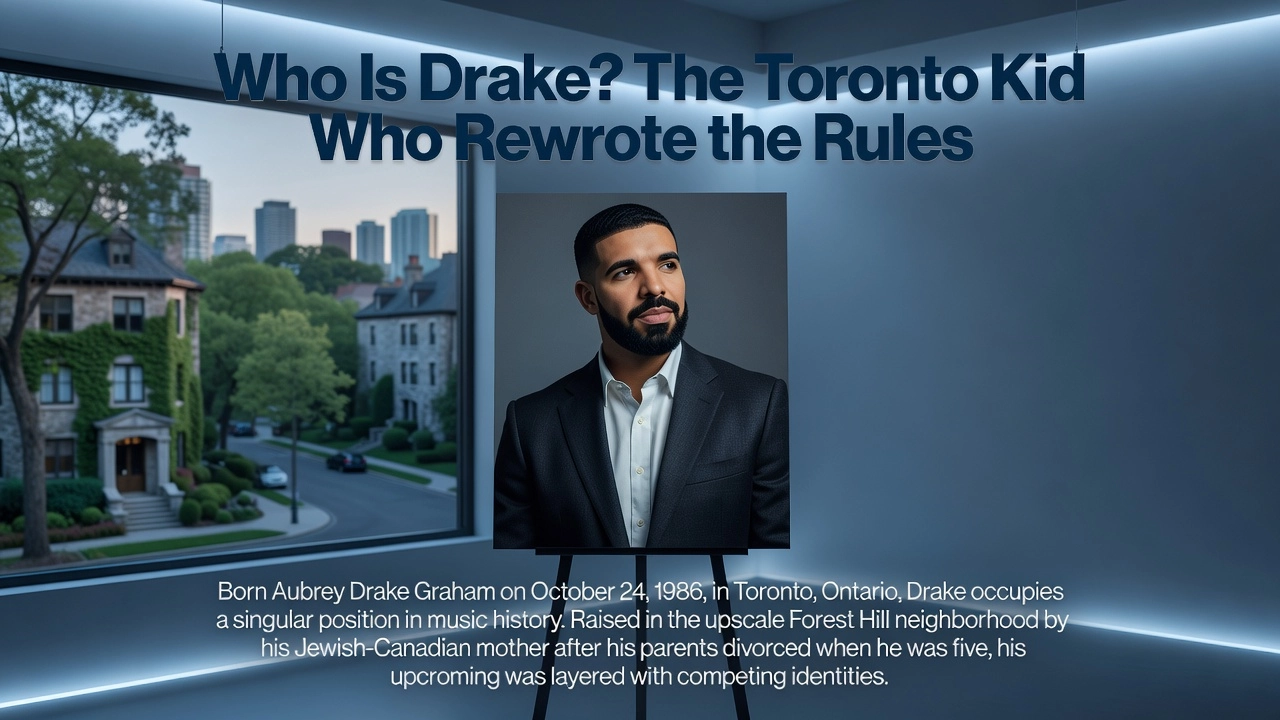
Born Aubrey Drake Graham on October 24, 1986, in Toronto, Ontario, Drake occupies a singular position in music history. Raised in the upscale Forest Hill neighborhood by his Jewish-Canadian mother after his parents divorced when he was five, his upbringing was layered with competing identities: Black and Jewish, Canadian and American-influenced, middle-class and creatively ambitious. His father, Dennis Graham, was a drummer who toured with Jerry Lee Lewis, meaning music ran through Drake's DNA long before he picked up a pen. That cultural complexity became foundational to his artistic voice, shaping a sound that resonated across borders and demographics in ways few artists have managed.
Before hip-hop claimed him, television did. At 15, Drake was cast as Jimmy Brooks on Degrassi: The Next Generation), the Canadian teen drama that became one of the country's most successful cultural exports. His character, a basketball star who is shot and paralyzed, demanded emotional precision and narrative depth across seven years of storytelling. That training in inhabiting complex, vulnerable characters translated directly into his approach to lyricism. Drake does not just rap about experiences; he reconstructs them with cinematic emotional clarity, a skill that separates him from peers whose technical ability outpaces their storytelling instincts.
His pivot to music was methodical rather than sudden. Mixtapes including Room for Improvement (2006) and So Far Gone (2009) built genuine underground credibility before he signed with Young Money and released his major-label debut, Thank Me Later, in 2010. The momentum was earned, not handed to him.
In 2012, Drake co-founded OVO Sound alongside Noah "40" Shebib and Oliver El-Khatib, turning Toronto from a footnote into a genuine force in global music. The label launched careers including PARTYNEXTDOOR, Majid Jordan, and dvsn, embedding Toronto's sonic identity into mainstream culture permanently.
That origin story, suburban rather than street-forged, actor before rapper, remains the most contested aspect of his legacy. It has generated both fierce admiration and persistent criticism throughout his career, and it sits at the center of every serious debate about where Drake ultimately belongs in hip-hop's hierarchy.
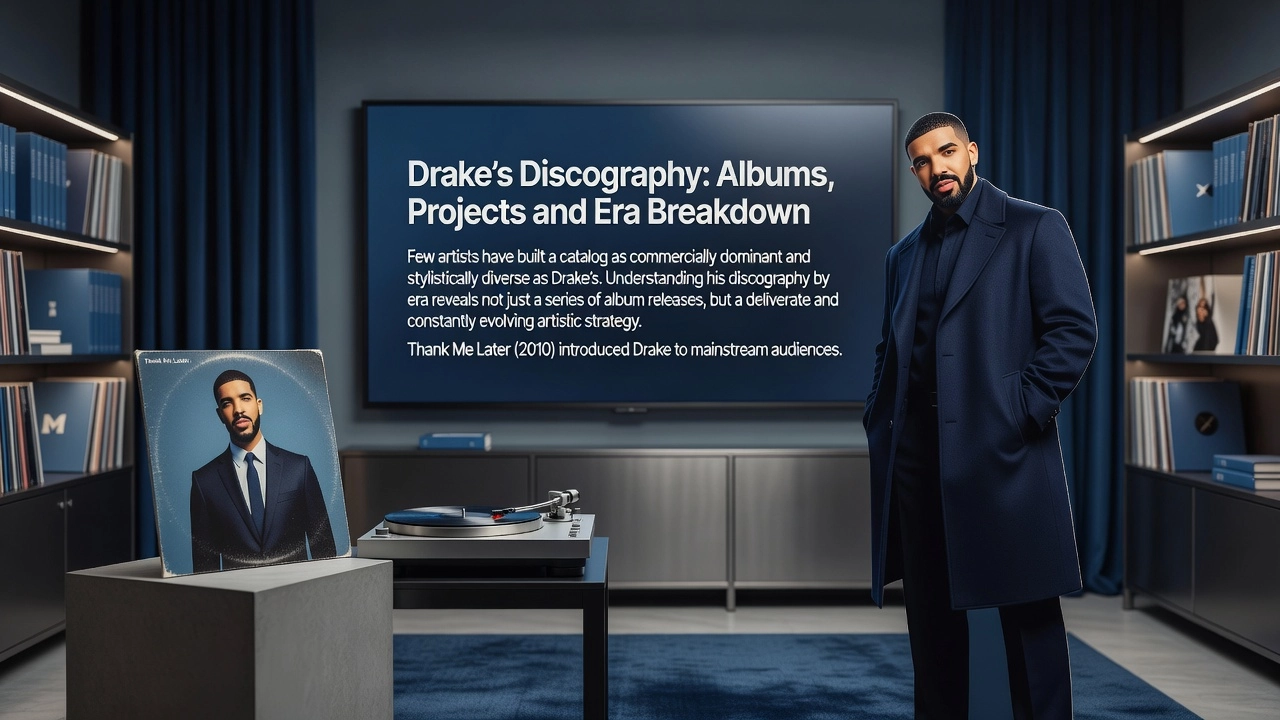
Few artists have built a catalog as commercially dominant and stylistically diverse as Drake's. Understanding his discography by era reveals not just a series of album releases, but a deliberate and constantly evolving artistic strategy.
The Commercial Peak: 2013 to 2018
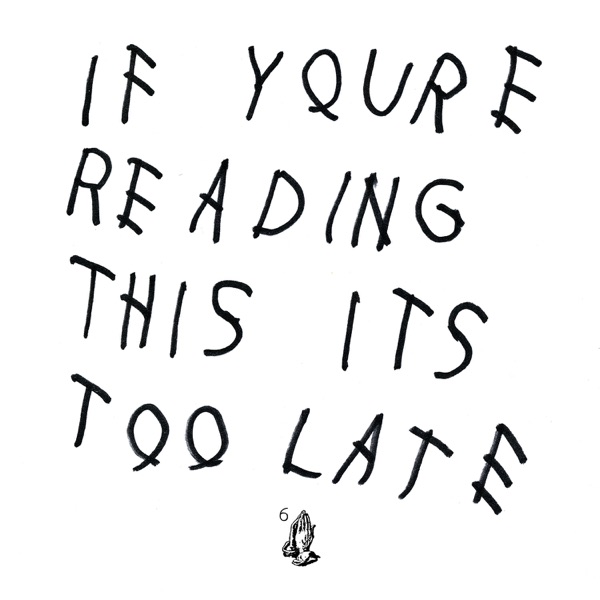
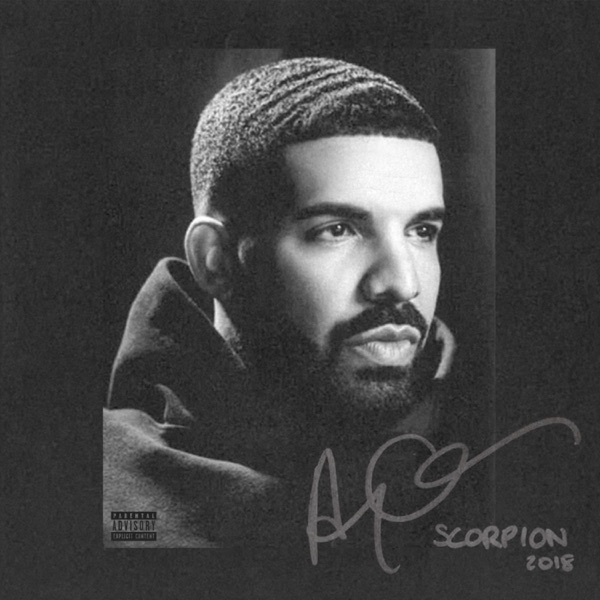
The mid-career stretch beginning with Nothing Was the Same (2013) and running through Views (2016) and Scorpion (2018) represents Drake operating at the apex of his commercial power. Nothing Was the Same delivered "Started From the Bottom" and "Hold On, We're Going Home," while the surprise mixtape If You're Reading This It's Too Late (2015) leaned into trap production and expanded his hardcore rap credibility. Views produced "One Dance," which has accumulated 4.4 billion Spotify streams as of mid-2026, making it one of the most-streamed tracks in the platform's history. Scorpion (2018) then broke Apple Music debut records, a record Certified Lover Boy would later surpass.
Format Experimentation and Genre Fluidity: 2017 to 2022
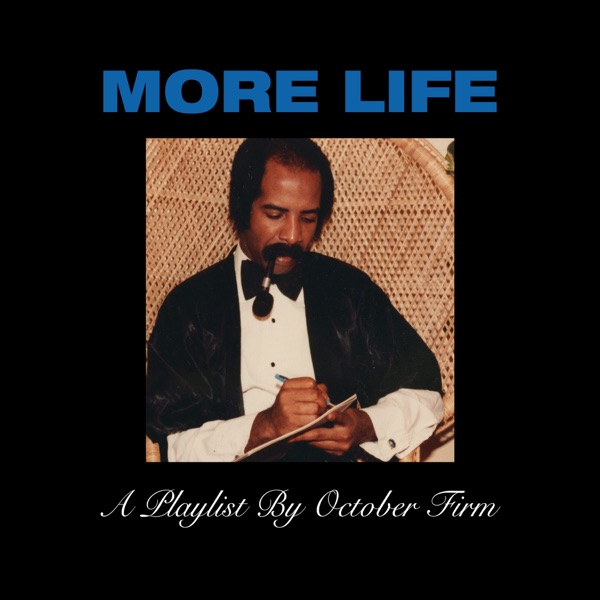
More Life (2017) arrived not as a traditional album but as a self-described playlist, folding in Afrobeats, UK grime, and dancehall in ways that rippled across pop-rap production for years afterward. Certified Lover Boy (2021) marked a return to trap-heavy, feature-dense rap alongside collaborators including Travis Scott, Lil Baby, and 21 Savage. That collaborative chemistry continued on Her Loss (2022) with 21 Savage exclusively. Sandwiched between them, Honestly, Nevermind (2022) pivoted sharply toward house and dance music, a move that divided longtime fans while signaling that Drake would never allow himself to become predictable.
The Post-Album Era: 2025 to 2026
Since 2025, Drake has stepped away from traditional full-length album cycles entirely. His output now consists of shorter, targeted releases including Some Sexy Songs 4 U, standalone singles like "Iceman," "Habibti," "Maid of Honour," and "Janice STFU" (which has already accumulated 236.5 million Spotify streams), and most recently "Come Real" featuring DJ Brisk and Cashis Green, released July 3, 2026. This approach reflects a broader industry shift toward audience retention through frequency rather than event-driven album drops, and Drake is executing it at a scale few artists can match.
The Sound Evolution: How Drake's Music Changed Hip-Hop
Few artists in modern music history have reshaped the sonic and emotional vocabulary of an entire genre the way Drake has. His evolution is not simply a story of stylistic curiosity; it is a deliberate, era-defining series of pivots that have consistently pulled hip-hop into new cultural territory.
Vulnerability as a Weapon
Before Drake, mainstream hip-hop largely rewarded projection: toughness, aggression, and emotional armor were the dominant currencies. "Marvin's Room" (2011) cracked that framework open. A late-night voicemail turned into a four-minute wound, the track demonstrated that raw emotional admission could be commercially formidable rather than commercially suicidal. "Hold On, We're Going Home" (2013) extended that logic into glossy, atmospheric R&B, proving that the same audience that responded to braggadocious rap would lean just as hard into longing and romantic restraint. The ripple effect was generational; a wave of male artists who followed in the 2010s operated with a degree of lyrical vulnerability that would have been nearly unthinkable a decade earlier.
The Afrobeats Bridge
The "Views" and "Scorpion" era marked a more explicit geographic and rhythmic expansion. "One Dance" (2016), produced with Afrobeats and UK funky influences embedded in its DNA, reached No. 1 in over 10 countries and accumulated what is now 4.4 billion Spotify streams, making it Drake's most-streamed track on the platform. Its significance went beyond chart performance. For many Western listeners, "One Dance" functioned as a first meaningful introduction to Afrobeats rhythm structures, the bouncing, percussive cadence that would later fuel global pop production across the decade. Drake did not invent the genre, but he served as one of its most powerful amplifiers to mainstream Western radio audiences.
The House Pivot and the Risk Instinct
"Honestly, Nevermind" (2022) arrived with almost no warning and divided audiences sharply. Informed by Drake's working relationships with South African house producer Black Coffee and producer Gordo, the project leaned into a dancefloor-first aesthetic that felt jarring to listeners expecting rap. Commercially, it was polarizing. Culturally, it was instructive. The album demonstrated a forward-looking instinct: house and Afro-electronic music were ascending globally, and Drake positioned himself inside that movement before it peaked in mainstream Western markets.
The Streaming-Era Sprint
The 2025 to 2026 phase reflects an entirely different philosophy of release. Tracks like "Iceman," "Habibti," "Maid of Honour," and "Come Real" represent a shift toward shorter runtimes, faster cycles, and club-facing production that fits naturally into playlist-driven listening behavior. This approach mirrors a broader industry shift away from the blockbuster album rollout and toward continuous catalog presence. With 91.3 million Spotify Monthly Listeners as of mid-2026 and a streaming pace described by industry observers as potentially hip-hop's biggest ever, the strategy is clearly calibrated for maximum platform saturation.
Each of these pivots carries a lyrical signature as distinct as its sonic one. The "Take Care" era traded in heartbreak and ascending ambition. "Scorpion" carried the weight of paranoia, paternity, and status anxiety. The house era introduced a mood of freedom and deliberate detachment from hip-hop's competitive theater. Tracking Drake's genre shifts, then, is not separable from tracking his interior life on record, which is precisely what makes his catalog such a rich subject for deep analysis.
Drake in 2025 and 2026: Singles Era and Streaming Dominance
The numbers Drake is posting in 2025 and 2026 have moved beyond impressive and into a category that requires its own analytical framework. As of late July 2026, he holds 91.3 million Spotify Monthly Listeners and 114.5 million Spotify Followers, while ranking 3rd globally on Chartmetric across all genres and all artists. That final distinction is worth pausing on: not 3rd among rappers, not 3rd in hip-hop, but 3rd across the entire documented landscape of recorded music. HotNewHipHop reported in March 2026 that Drake was on pace for hip-hop's biggest streaming year ever, and that report came before his triple-album release of ICEMAN, Habibti, and Maid of Honour had even landed, meaning the actual trajectory almost certainly exceeded those projections.
Catalog Depth and the Singles Shift
The structural engine behind these numbers is a catalog that compounds over time rather than fading between album cycles. His most-streamed track, "One Dance," has accumulated 4.4 billion Spotify streams, a figure that places it among the most replayed songs in the platform's history. Alongside that catalog anchor, current lead single "Janice STFU" had already reached 236.5 million streams as of mid-2026. A newer release clearing that threshold so quickly signals something beyond a typical promotional window; it reflects a listener base that is actively engaged regardless of release timing. Drake's shift toward shorter projects and standalone singles since 2025 appears deliberately calibrated to maintain that engagement rhythm rather than concentrate attention on a single album cycle.
The Unexplained May Spike
Perhaps the most analytically interesting data point from this period involves a growth anomaly that no source has fully explained. On May 19, 2026, Drake gained 2,423,357 new Spotify Monthly Listeners in a single day, a spike of 2,433.8% above his normal daily growth rate. The day prior, May 18, saw 436,372 new Spotify Followers added, a 494.2% increase over baseline. Whether this correlates with a specific release event, a playlist trigger, or an algorithmic amplification remains unclear. What it does confirm is that his audience infrastructure is sensitive enough to generate historic single-day figures even when the underlying cause is ambiguous.
TikTok, Playlists, and Discoverability at Scale
Drake's streaming dominance does not operate in isolation from platform-wide discoverability mechanics. His TikTok footprint spans 124.5 million posts using his music, generating 204.7 billion top video views, which makes his catalog one of the most active creative resources for user-generated content anywhere online. That kind of organic utility keeps catalog tracks cycling through new audiences continuously. On Spotify specifically, his music appears across 3.5 million playlist placements with a combined playlist reach of 1.1 billion listeners, complemented by 586.9 million all-time Shazams. You can track Drake's Spotify presence directly to observe how those metrics translate into real-time listener behavior. This discoverability infrastructure, built across years of algorithmic placement and cultural saturation, is a primary reason his 2025 streaming total reportedly exceeded the entire career catalogs of multiple other rappers, a figure that circulated widely on social media and has yet to be formally disputed.
After the Feud: Drake's Legacy in the Post-Kendrick Era
The 2024 Drake vs. Kendrick Lamar feud did not stay contained within hip-hop circles. It registered as a genuine mainstream cultural event, drawing coverage from outlets and audiences with no prior investment in rap discourse. Wikipedia dedicated an entire standalone section to it. Journalists who rarely engage with hip-hop were filing analysis. The scale of the moment meant that by the time it concluded, Drake's legacy was no longer being evaluated in isolation. It was being measured against a rival, a narrative, and a specific outcome that critics were quick to characterize as decisive.
That framing has proven difficult to escape. Fan commentary throughout early 2026 reflects a discourse that, as one widely-shared observation put it, cycles endlessly between Drake's past catalog and his positioning relative to Kendrick. His artistic output, regardless of its actual quality or commercial performance, is being processed through the rivalry lens first. Isaac Hayes III made this dynamic visible in structural terms, arguing that when the two biggest artists in hip-hop went to war, the rest of the industry was forced to choose sides or disengage entirely. The result, Hayes contends, was a collapse in cross-artist collaboration that had historically driven songs into the upper reaches of the charts. Critically, he draws a distinction that matters for evaluating Drake's post-feud position: consumption does not equal creation, and streaming dominance does not automatically mean the culture is moving forward commercially.
Drake's creative response to this context has been deliberate. Rather than re-entering battle-rap-adjacent territory, his post-feud output has leaned toward sensuality, international production, and club-oriented energy. Projects like Some Sexy Songs 4 U, Habibti, and Come Real represent a recalibration toward sonic territory where Drake has always performed well but where ego and rivalry are structurally irrelevant. The move reads less like retreat and more like a conscious refusal to let the feud define his creative identity going forward.
The streaming data actively complicates any clean post-feud decline narrative. With 91.3 million Spotify Monthly Listeners and a Chartmetric global rank of 3rd among all artists, Drake's audience has not contracted in any meaningful way. DJ Whoo Kid reported that Drake's "Make Them Cry" broke the single-day Spotify streaming record previously held by Kendrick's "Not Like Us," logging 13.2 million streams versus 13.1 million, though commenters immediately noted the comparison was imperfect given the difference in promotional buildup. The numbers, contested or not, illustrate that the audience relationship remains intact.
The GOAT debate that has emerged from this period is data-rich and genuinely unresolved. TikTok videos asking whether Drake belongs in the top three rappers of all time are generating upward of 42,000 likes. Reddit threads are drawing direct comparisons between his streaming milestones and those of Kanye West, with some analysts suggesting only those two artists have crossed certain benchmark thresholds in rap streaming history. What makes these discussions more than fan noise is that they are happening against a backdrop of real numbers: Drake's 2025 streaming total reportedly exceeded the entire career catalogs of multiple other artists. The GOAT question, for this generation, is increasingly being answered through data rather than critical consensus, and on that particular scorecard, the post-Kendrick chapter has not closed Drake's case.
Beyond Music: Titles Ruin Everything and the Literary Drake
Most analyses of Drake's artistic identity begin and end with his music catalog. That framing, while understandable, leaves a significant dimension of his creative work largely unexplored. In 2023, Drake released Titles Ruin Everything, a poetry collection co-created with collaborator Kenza Samir. The project received almost no editorial coverage from major music platforms, and it does not appear in Drake's Wikipedia discography. A July 2023 Interview Magazine piece referencing "Drake's book of poems" represents one of the few traces of cultural acknowledgment the collection received. For a catalog as thoroughly documented as Drake's, this absence is striking and analytically significant.
The Philosophy Embedded in the Title
The collection's title is itself an artistic declaration worth examining closely. Titles Ruin Everything suggests that the act of naming, categorizing, and labeling diminishes the raw, unmediated experience of creative work. This philosophy maps directly onto patterns that have defined Drake's musical career. He has consistently resisted genre classification, releasing trap records alongside house-influenced albums and dancehall-adjacent singles within the same creative periods. His lyrics frequently deploy deliberate ambiguity in relationship narratives, refusing to resolve emotional situations with clean labels. The title of this collection is not incidental; it reads as a thesis statement for an entire artistic sensibility.
A Primary Source with No Equivalent in His Catalog
For a platform like MyBesh), which focuses on editorial-grade song meaning and lyrical interpretation, Titles Ruin Everything functions as a rare primary source. Poetry operates outside the structural constraints of song production, verse-hook architecture, and commercial framing. The language Drake uses in this collection offers interpretive context for his broader lyrical identity that simply does not exist elsewhere in his output.
The collaboration with Kenza Samir also illuminates an underexamined layer of Drake's creative ecosystem. His most influential collaborators are not always producers or featured artists; some shape the conceptual architecture of his projects from positions that receive far less visibility. Recognizing these relationships is precisely the kind of analytical depth that separates serious music interpretation from surface-level news coverage, and it is a space that remains largely unoccupied in existing Drake reference content.
Drake's Toronto Legacy and Canadian Music Identity
Drake's relationship with Toronto has never been simple birthplace branding. From the launch of OVO Fest in 2010, his annual hometown concert series that became one of Canada's most-watched music events, to his sustained institutional investment in the city's artists and scenes, Drake functioned less as a local hero and more as a deliberate cultural ambassador. He applied the same cartographic instinct to Toronto that Jay-Z applied to Brooklyn and Outkast applied to Atlanta, placing the city's geography, its accent, and its particular social textures into global hip-hop consciousness at a time when no Canadian city held meaningful real estate in that conversation.
OVO Sound as an Ecosystem
The clearest evidence that Drake's Toronto influence is structural rather than symbolic is OVO Sound, the label he co-founded in 2012 alongside producer Noah "40" Shebib and creative director Oliver El-Khatib. The roster it developed, including PARTYNEXTDOOR, Roy Woods, dvsn, and Majid Jordan, represents a generational cohort of Canadian artists who might have faced significantly longer runways to international visibility without that platform. OVO Sound Radio extended the reach further, functioning as a curatorial vehicle that introduced audiences globally to Toronto's broader musical ecosystem. The label did not just sign acts; it created a credible framework for Canadian urban music to exist on its own terms, with its own aesthetic identity.
Lyrics That Require a Map
Drake's lyrics embed Toronto with a specificity that most listeners consume passively without fully decoding. References to Scarborough geography, the 401/Markham Road corridor, Weston Road, and the cultural texture of the city's multicultural communities carry layered meaning that rewards closer examination. These are not decorative local shoutouts; they are autobiographical coordinates. The outsider-wanting-in energy running through "Take Care," the chip-on-the-shoulder ambition compressed into "Started From the Bottom," and the defensive pride surfacing throughout his response catalog all trace directly to his formation as a Canadian artist who had to earn credibility in a market that treated his nationality as a liability rather than an asset. As of July 2026, Concordia University is now offering an entire course dedicated to Drake's music and cultural impact, a development that confirms the Toronto and Canadian identity angle has moved beyond pop-cultural conversation into formal academic study.
The Coverage Gap
Despite this depth of local specificity, Drake's Canadian identity remains one of the most underexplored dimensions of his catalog in English-language music content. American-dominated media coverage consistently reframes him through a US cultural lens, and his sheer commercial dominance in that market tends to subsume the Toronto context rather than illuminate it. This creates a genuine interpretive gap: listeners engaging with his catalog through a purely American hip-hop framework will misread, or simply miss, entire layers of meaning embedded in the geography and psychology of his music. Platforms capable of providing research-backed, locally-informed annotation for that material are serving a real analytical function, not merely offering trivia.
Essential Drake Songs: Meanings, Interpretations and Deep Dives
Drake's catalog rewards the kind of listener who treats lyrics as a primary text. Across nearly two decades of releases, certain tracks stand out not just for their commercial performance but for the interpretive depth they invite, functioning as documents of a specific emotional or cultural moment rather than simple entertainment.
Classic Tracks That Reward Close Reading
"Marvins Room" remains one of the most widely discussed songs in Drake's catalog for good reason. The track is structured as a real-time phone call, placing the listener inside a moment of vulnerability that feels less composed than confessional, almost uncomfortably immediate. The genius of the song is its refusal to clean up its own emotional logic; it presents jealousy, longing, and insecurity without resolving them into a neat conclusion. "Fear," from the 2018 double album Scorpion, operates differently but with equal emotional directness. Across nearly seven minutes, Drake addresses mortality, betrayal, and the psychological weight of success in language that is unusually plain for an artist associated with carefully constructed public image. It reads less like a rap song and more like a private letter that was accidentally left unsealed.
Recent Releases and Their Interpretive Layers
Drake's 2026 output introduces fresh material for analysis. "Habibti," which takes its title from an Arabic term of endearment, continues a pattern in his work of engaging with non-English language and Middle Eastern cultural references; the choice is neither incidental nor purely aesthetic, but part of a broader identity project that academic research has traced through his catalog for years. "Maid of Honour" generates a different kind of interpretive split, with some listeners reading it as a sincere romantic tribute and others hearing it as a status commentary dressed in affectionate language. Both readings are defensible, which is precisely what makes the track interesting.
"Janice STFU," which has accumulated 236.5 million Spotify streams as of mid-2026 and received a remix shortly after release, sits at the center of an active interpretive debate. For some fans, it reads as a confident post-feud statement, a demonstration that Drake has moved past the Kendrick Lamar chapter with his commercial footing intact. Others see it as another iteration of the persona-projection that has defined his late-career output, where confidence and vulnerability are strategically layered rather than straightforwardly expressed. That debate is ongoing across fan communities and platforms.
Her Loss, the 2022 collaboration with 21 Savage, remains among his most analytically dense recent work. The production and lyrical register throughout that project reward repeated listening, with cultural commentary embedded in lines that initially read as surface-level flex. For listeners interested in exploring these layers track by track, Discography Deep Dives: Drake offers a useful starting point for era-by-era breakdown.
MyBesh hosts community annotations and song meanings for Drake's catalog across every era, from So Far Gone deep cuts to 2026 singles from Iceman. For listeners who want to move beyond passive consumption and engage with what a specific lyric or reference actually means, it functions as a genuinely comprehensive interpretive resource.
Drake's Cultural Footprint by the Numbers
The scale of Drake's global presence becomes clearest when examined through raw platform data. As of mid-2026, his cross-platform social footprint reads as follows: 139.9 million Instagram followers, 32.8 million YouTube subscribers, 49 million Facebook followers, and 33.8 million followers on X. These figures do not represent strength on one platform compensating for weakness on another. They represent simultaneous top-tier dominance across every major social channel, a combination that places him among the most-followed musicians alive regardless of genre, era, or regional market.
YouTube as Historical Archive and Active Channel
His YouTube total of 23.6 billion views carries a dimension that pure stream counts often obscure: longevity. Drake's video catalog spans nearly two decades, from early mixtape-era footage through major album cycles like Take Care and Scorpion to 2025 and 2026 releases including Habibti and Some Sexy Songs 4 U. Official music videos sit alongside documentary content and concert footage, meaning his channel functions simultaneously as a current release platform and a deep archive. Few artists at his commercial tier have maintained active algorithmic relevance on YouTube while accumulating that volume of historical content.
Shazam as a Measure of Cultural Saturation
Drake's 586.9 million all-time Shazam recognitions are among the most analytically revealing figures in his entire data profile. Unlike stream counts, which track intentional playback, Shazam data measures something more specific: a listener encountered the song passively, in a retail environment, on radio, in a television placement, or through an algorithmic playlist, and was moved to actively identify it. That sequence, passive exposure followed by active engagement, is a reliable signal of deep cultural embedding. Nearly 587 million instances of that conversion across his catalog indicates that Drake's music saturates ambient listening environments at a scale most artists never approach.
Playlist Infrastructure and Discovery Architecture
His 3.5 million Spotify playlist placements, carrying a combined reach of 1.1 billion, reveal something structurally significant about how his catalog functions within the streaming ecosystem. Drake's music appears across flagship editorial playlists and algorithmically generated recommendations alike, meaning his reach extends to both active fans and passive listeners being introduced to his catalog for the first time. This dual-channel presence is rare; most artists access one or the other, not both simultaneously and at this scale.
Taken together, these numbers describe a self-reinforcing system. High social engagement drives streaming activity, streaming activity feeds algorithmic recommendations, recommendations extend catalog reach to new audiences, and new audiences generate social engagement. That feedback loop, operating consistently across both catalog titles and new releases, is what separates Drake's data profile from artists with comparable individual peaks but narrower overall footprints.
The Drake Reference You Can Actually Use
Drake's catalog rewards deep engagement in a way that few contemporary bodies of work can match. Whether you are tracing the lyrical evolution from the confessional intimacy of Take Care through to the genre-fluid ambition of Some Sexy Songs 4 U, contextualizing the record-shattering streaming numbers that followed the Kendrick rivalry, or examining the literary dimensions of Titles Ruin Everything, there is consistently more beneath the surface than any single listen captures. The 2026 triple-album drop alone, spanning rap, R&B, and dance across 43 tracks, offers enough thematic and sonic material to reward sustained critical attention. Each release cycle adds new layers of meaning to older catalog entries, making the work genuinely cumulative.
MyBesh's song meanings and lyric interpretation pages are built for exactly this kind of engagement. Community annotations and editorial analysis are available across both long-standing catalog staples and the most recent 2025 to 2026 singles, giving you multiple interpretive angles on the same track. Exploring related artist profiles for 21 Savage, Lil Wayne, Kendrick Lamar, and PARTYNEXTDOOR adds essential collaborative and competitive context that shapes how individual songs read. With Drake now releasing music more frequently than at any prior point in his career, returning to this reference regularly ensures you are working with a complete and current picture of one of contemporary music's most complex catalogs.

 via depositphotos ↗