
30-sec preview
2017 · From the album More Life
Passionfruit
by Drake
The reading
A long-distance relationship dissolving in real time, where wanting someone from far away isn't the same as being able to keep them
02 · Interpretation
Passionfruit: Drake's Anatomy of a Long-Distance Unraveling
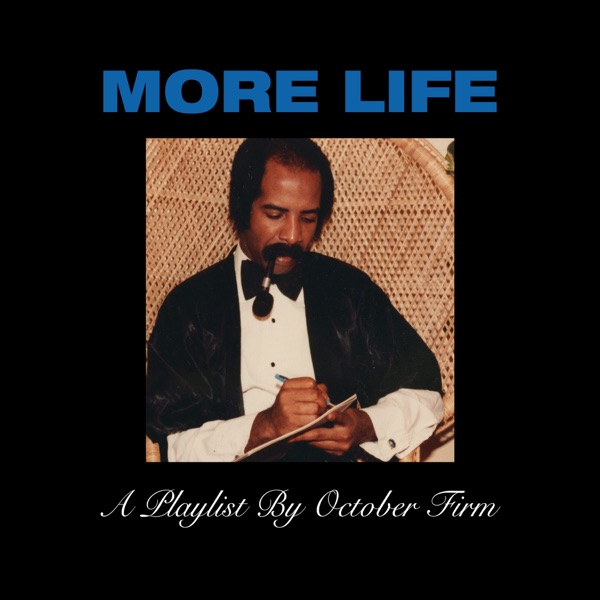
The song is about trying to keep a relationship intact across a distance that neither person is willing to close. Drake released it on March 18, 2017 as part of 'More Life', a project he framed as a playlist rather than an album, and 'Passionfruit' became its emotional centerpiece, a slow tropical-house track that sounds like an apology being typed and deleted.
The opening is staged as a false start. Drake interrupts himself, tells the room to get more drinks, jokes that he'll sound better once they do. It is a small piece of theater that doubles as a thesis: this is a song about needing the conditions to be right before you can say the hard thing. The lubrication is for him, not the listener.
The verses: a relationship audited at distance
The first verse opens with a striking image. Seeing this person has become 'ritualistic', cleansing him of an addiction, at least for now. The hedge matters. Drake is not claiming healing, only a temporary remission, and the next line concedes he is falling apart anyway. The relationship is medicinal but not curative.
The second verse names the problem directly. There is tension between them 'just like picket fences', a simile that works two ways: picket fences are both a boundary and the suburban shorthand for the domestic life this couple is failing to build. He alludes to her 'issues' but refuses to list them, a gesture of restraint that also sounds like score-keeping postponed.
The later verses keep auditing. Trust is harder to build from a distance, so he suggests they 'rule out commitment for now', a phrase delivered like a business decision. When she pulls away, he reads it as retaliation rather than conclusion, then tells her not to bother picking up the pieces. Whatever 'they' are, they keep fracturing in the same places.
The hook: a diagnosis in four lines
The chorus is the song's clearest writing. He is passionate from miles away, she is passive with the things she say, and someone is passing up on the old ways. The triple play on 'passion-passive-passing' compresses the whole arc of a fading romance into wordplay that sounds almost casual. The closing 'I can't blame you' is the kind of line that ends arguments by refusing to have them. It can be read as generosity or as exhaustion, and the song lets both readings stand.
The final spoken aside, trying to think of the right thing to say, is the tell. The track ends not with a resolution but with a man still drafting the message.
Where it sits in Drake's catalogue
'More Life' was Drake's experiment in absorbing global pop sounds, particularly UK funky, Afrobeats, and dancehall, and 'Passionfruit' belongs to that lineage. The production, credited to Nana Rogues, sits on a four-on-the-floor pulse closer to a Balearic house record than to a typical Drake single. That choice matters interpretively. The song uses the sound of a club at three in the morning, the moment when the night is ending and the conversation has not been had. It is Drake's version of a Robyn record, dancing through the breakup.
The long-distance theme is one Drake has worked before, most famously on 'Marvins Room' and 'Hotline Bling', but 'Passionfruit' is less self-pitying than either. The narrator does not call drunk; he texts politely and lets the silence do the work. The song endures because it captures something specific to its moment: a relationship maintained mostly through screens, where the absence of contact is itself a message, and where the kindest thing you can say is that you do not blame the other person for leaving.
Themes catalogued
03 · Lyrics
"Passionfruit"
Hold on, hold on, fuck that
Fuck that shit
Hold on, I got to start this motherfuckin' record over again, wait a minute
Fuck that shit
Still on this motherfuckin' record
I'ma play this motherfucker for y'all
Ayy, y'all get some more drinks goin' on, I'll sound a whole lot better
Listen
Seein' you got ritualistic
Cleansin' my soul of addiction for now
'Cause I'm fallin' apart, yeah
Tension
Between us just like picket fences
You got issues that I won't mention for now
'Cause we're fallin' apart
Passionate from miles away
Passive with the things you say
Passin' up on my old ways
I can't blame you, no, no
Passionate from miles away
Passive with the things you say
Passin' up on my old ways
I can't blame you, no, no
Listen
Harder buildin' trust from a distance
I think we should rule out commitment for now
'Cause we're fallin' apart
Leavin'
You're just doing that to get even
Don't pick up the pieces, just leave it for now
They keep fallin' apart
Passionate from miles away
Passive with the things you say
Passin' up on my old ways
I can't blame you, no, no
Passionate from miles away
Passive with the things you say
Passin' up on my old ways
I can't blame you, no, no
Um, trying to think of the right thing to say
Lyrics via Google. Copyright belongs to rights holders.
04 · FAQ
Frequently asked
What does 'Passionate from miles away, passive with the things you say' mean in Passionfruit?
Why does Drake start Passionfruit with the spoken intro about restarting the record?
Is Passionfruit about a specific person in Drake's life?
What genre is Passionfruit and who produced it?
How does Passionfruit compare to Drake's other breakup songs like Marvins Room or Hotline Bling?
What does 'tension between us just like picket fences' mean?
Why has Passionfruit remained one of the most streamed songs from More Life?
05 · Discography

