
 via depositphotos ↗
Artist
Eminem
About
Who is Eminem?
Few artists in music history have risen from poverty and hardship to reshape an entire genre the way Eminem has. Born Marshall Bruce Mathers III, this Detroit rapper did not simply succeed in hip-hop; he completely transformed it, becoming one of the best-selling music artists of all time with over 220 million records sold worldwide.
Whether you have heard his name through chart-topping hits, controversial lyrics, or cultural references in movies and television, understanding who Eminem truly is requires a closer look at the full picture. His journey is one of raw talent, relentless dedication, and an uncanny ability to turn personal pain into powerful art.
In this post, we will walk you through everything you need to know about Eminem. From his difficult childhood in Detroit to his breakthrough with "The Slim Shady LP," his celebrated discography, and the lasting legacy he has built over three decades, this guide covers it all. By the end, you will have a clear and thorough understanding of why Eminem remains one of the most important figures in modern music.
Who Is Eminem
Words arrive before you can fully track them, syllables stacked in dense internal rhyme schemes over spare, minimal production, a voice capable of pivoting from sneering black comedy to barely-composed confession within the same sixteen bars. That engineered chaos, precise yet volatile, is why Marshall Bruce Mathers III still commands 71.2 million Spotify monthly listeners as of August 2026.
Born October 17, 1972, in St. Joseph, Missouri, and raised in Detroit, Michigan from around age 12, Eminem began rapping competitively as a teenager and released his independent debut Infinite in 1996. What followed across nearly three decades is a catalogue without a quieter phase: every one of his twelve studio albums debuted at number one on the Billboard 200, a consistency that no streaming algorithm alone explains.
The music itself earns the numbers. His double-time flows compress syllable counts that would fill two bars into one, riding against beats that often refuse to crowd him, leaving negative space for the density of his delivery to hit harder. The tonal register shifts are equally deliberate: the Slim Shady persona carried sardonic provocation and grotesque humor, while albums like Recovery (2010) and The Marshall Mathers LP 2 (2013) traded that mask for confessional exposure, songs like "Beautiful" and "Walk on Water" showing vulnerability that made the aggression of earlier records feel, in retrospect, partly defensive.
That arc, from underground Detroit battle rapper to one of the best-selling musicians of the 21st century with over 220 million records sold worldwide, structures everything that follows in this piece. The narrative moves through five phases: early Detroit struggle and the commercial failure of Infinite; the major-label breakthrough engineered with Dr. Dre and the Slim Shady persona; the commercial apex of The Marshall Mathers LP and The Eminem Show; addiction, near-death, and reinvention; and finally the 2024 album The Death of Slim Shady (Coup de Grâce), which formally retired the alter ego that made him famous. Understanding Eminem's full career trajectory means understanding each of those phases as distinct chapters, not a single continuous rise.
Detroit Underground and the Infinite Years (1992-1998)
Marshall Bruce Mathers III arrived at Detroit's hip-hop underground not as an outsider looking in, but as a teenager with something to prove. Having moved between Missouri and Michigan throughout his childhood and settling on Detroit's Eastside around age 12, Mathers began rapping at roughly 14 and dropped out of school at 17 to pursue it full time. The battle rap circuit became his classroom. Venues like The Shelter, the basement stage beneath St. Andrew's Hall, were where reputations were built or destroyed in real time, and Mathers competed under the Eminem name, constructing his technical precision line by line before any label had heard his name. His early ally Proof, later a founding member of D12, reportedly vouched for him directly with Detroit crowds, on at least one occasion pushing a hesitant Mathers on stage at The Shelter to face the audience. The Detroit underground scene provided the friction that sharpened him.
Infinite arrived in 1996 through Web Entertainment, a self-funded release with minimal retail distribution and almost no radio play; local Detroit DJs largely refused to spin it. The album registers a lyrical complexity score of 52.9 out of 100 and a type-token ratio (TTR) of 0.61, both the highest measurable points of his entire career, indicating a vocabulary-rich, density-first approach built to impress hip-hop peers rather than reach casual listeners. (Note: these figures derive from a computational lyrical analysis study; readers should cross-reference the original source for full methodology.) The sound of Infinite was dense by design: verses packed wall to wall with syllables, internal rhyme schemes that would resolve four or five lines after they began, and production leaning squarely into mid-1990s East Coast templates, the polished boom-bap aesthetic then dominant in New York. It was a record that announced craft before personality, and for that reason it found a limited audience outside the underground.
The 1997 Slim Shady EP, also through Web Entertainment, changed the equation entirely. Where Infinite showcased precision aimed at peer respect, the Slim Shady persona introduced a deliberately provocateur character, theatrically violent, darkly comedic, and designed to unsettle. Peers who had followed his underground run heard the shift as total. Detroit rapper Lazarus described the contrast plainly: hearing "My Name Is" prompted genuine disbelief that it was the same artist.
The turning point came at the 1997 Rap Olympics, a prominent national battle competition where Mathers performed and a demo of the Slim Shady material reached Dr. Dre. The Encyclopedia of Detroit entry on Mathers reflects the institutional weight that period carries in his biography. What the underground years established, beyond any eventual deal, was a work ethic and a technical foundation that no major-label contract could have manufactured.
The Slim Shady Breakthrough and Commercial Peak (1999-2002)
When The Slim Shady LP arrived on February 23, 1999, it announced itself through a specific sonic blueprint: Dr. Dre's production stripped back to bare, unsettling bones, minimal low-end pressure, and just enough space for Eminem's delivery to feel like it was crowding you out of the room. The beats were spare and slightly menacing, more negative space than noise, which made the vocals land harder. Eminem deployed the Slim Shady persona in a register pitched slightly higher and more manic than his natural voice, the kind of cartoonish exaggeration that made even his most disturbing lines feel like a dare rather than a confession. The album debuted at number two on the Billboard 200 and was eventually certified Diamond in the United States by the RIAA.
▶ Side A · Most played
The Eminem tracklist
2002 / 8 Mile (Music from and Inspired By the Motion Picture)
Lose Yourself
- Length
- 5:22
- Reads
- 111
- Interpretation
- Published
A-side · 2–5
№ 08 · In the press
Latest on Eminem
All music newsEminem and EZ Mil Team Up With 'Naruto' Star for New Track 'MADARA'
Eminem and EZ Mil collaborate with a Naruto series star on a new song titled "MADARA."
Read in full at complex-
From Cardi B to an Eminem Collab & Troye Sivan, Which New Music Release Is Your Favorite This Week? Vote!
-
Eminem Recalls His Slim Shady Flow While Sparring With Ez Mil on ‘Naruto’-Inspired ‘Madara’ Single
-
Kid Rock Wants to Show Friendship Triumphs Over Politics With New Eminem Collaboration
-
Eminem Pays Tribute to Proof on Late Rapper's 53rd Birthday
-
Eminem Teams With NERDS Clothing for New York Comic Con Merch and Video Game Collab
-
Eminem Teams With NERDS Clothing for Original Video Game, New Streetwear Collab Out of New York Comic Con (EXCLUSIVE)
-
Kid Rock Searching For Salvation on Upcoming ‘Halfway to Jesus’ Christian Rock Album Featuring Eminem Collab
◐ Discography · 18 releases
Eras of Eminem
Earlier eras
Scroll →
-
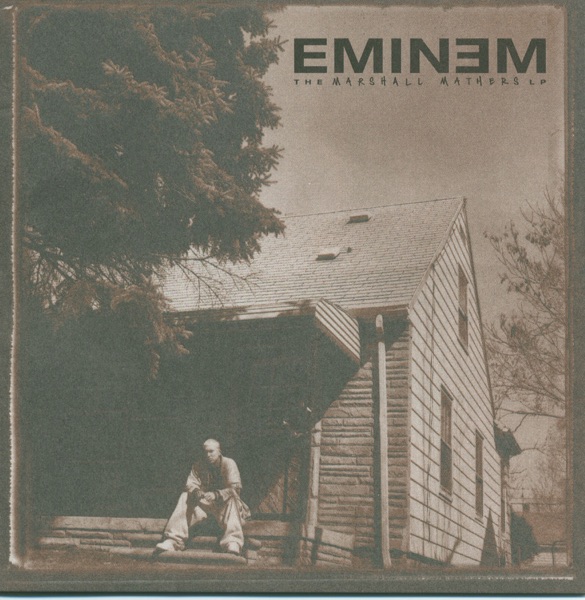
The Marshall Mathers LP
-

Music To Be Murdered By
-

Recovery
-
G
Global Warning
-
(
(Mixed by DJ Green Lantern)
-

8 Mile (Music from and Inspired By the Motion Picture)
-

The Marshall Mathers LP2 (Deluxe)
-

The Eminem Show
-

Encore (Deluxe Version)
-
Venom (Music from the Motion Picture) - Single
-
Houdini - Single
-

Kamikaze
-

The Slim Shady LP (Expanded Edition)
-
Revival
-

Relapse: Refill
-
Curtain Call: The Hits
-

Music To Be Murdered By - Side B (Deluxe Edition)
◷ Full catalog · 15 years
Every song by Eminem, in order
- Premonition (Intro) Music To Be Murdered By
- Unaccommodating (feat. Young M.A) Music To Be Murdered By
- You Gon' Learn (feat. Royce da 5'9" & White Gold) Music To Be Murdered By
- Alfred (Interlude) Music To Be Murdered By
- Those Kinda Nights (feat. Ed Sheeran) Music To Be Murdered By
- In Too Deep Music To Be Murdered By
- Godzilla (feat. Juice WRLD) Music To Be Murdered By
- Darkness Music To Be Murdered By
- Gnat Music To Be Murdered By - Side B (Deluxe Edition)
- Leaving Heaven (feat. Skylar Grey) Music To Be Murdered By
- Yah Yah (feat. Royce Da 5'9", Black Thought, Q-Tip & Denaun) Music To Be Murdered By
- Stepdad (Intro) Music To Be Murdered By
- Stepdad Music To Be Murdered By
- Marsh Music To Be Murdered By
- Never Love Again Music To Be Murdered By
- Little Engine Music To Be Murdered By
- Lock It Up (feat. Anderson .Paak) Music To Be Murdered By
- Farewell Music To Be Murdered By
- No Regrets (feat. Don Toliver) Music To Be Murdered By
- I Will (feat. KXNG Crooked, Royce da 5'9" & Joell Ortiz) Music To Be Murdered By
- Alfred (Outro) Music To Be Murdered By
- Recovery Recovery
- Losing Days Recovery
- The Way I Tend to Be Recovery
- Plain Sailing Weather Recovery
- Good & Gone Recovery
- Tell Tale Signs Recovery
- Four Simple Words Recovery
- Polaroid Picture Recovery
- Rap God The Marshall Mathers LP2 (Deluxe)
- The Fisher King Blues Recovery
- Anymore Recovery
- Oh Brother Recovery
- Broken Piano Recovery
- The Monster (feat. Rihanna) The Marshall Mathers LP2
- We Shall Not Overcome Recovery
- Wherefore Art Thou Gene Simmons? Recovery
- Tattoos Recovery
- Time Machine Recovery
- Undeveloped Film Recovery
- Baby The Marshall Mathers LP2
- Bad Guy The Marshall Mathers LP2
- Brainless The Marshall Mathers LP2
- Evil Twin The Marshall Mathers LP2
- Lose Yourself 8 Mile (Music from and Inspired By the Motion Picture)
- Cleanin' Out My Closet The Eminem Show
- Lose Yourself (Soundtrack Version) [Edited Version] Curtain Call: The Hits
- Without Me The Eminem Show
- Superman (feat. Dina Rae) The Eminem Show
- 'Till I Collapse (feat. Nate Dogg) The Eminem Show
- Public Service Announcement 2000 The Marshall Mathers LP2
- Kill You The Marshall Mathers LP2
- Stan (feat. Dido) The Marshall Mathers LP2
- Paul (Skit) The Marshall Mathers LP2
- Who Knew The Marshall Mathers LP2
- Steve Berman The Marshall Mathers LP2
- The Way I Am The Marshall Mathers LP2
- The Real Slim Shady The Marshall Mathers LP2
- Remember Me? (feat. RBX & Sticky Fingaz) The Marshall Mathers LP2
- I'm Back The Marshall Mathers LP2
- Marshall Mathers The Marshall Mathers LP2
- Ken Kaniff (Skit) The Marshall Mathers LP2
- Ballad The Marshall Mathers LP2
- Amityville (feat. Bizarre) The Marshall Mathers LP2
- Bitch Please II (feat. Dr. Dre, Snoop Dogg, Nate Dogg & Alvin Joiner) The Marshall Mathers LP2
- The Kids The Marshall Mathers LP2
- Under the Influence (feat. D12) The Marshall Mathers LP2
- Criminal The Marshall Mathers LP2