
30-sec preview
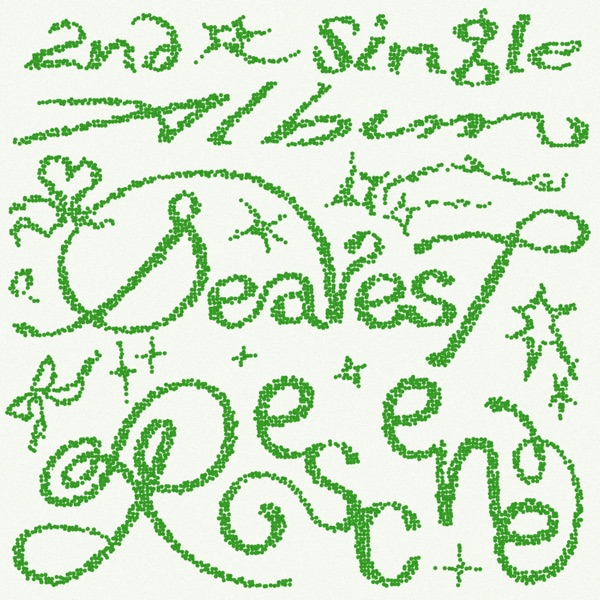
2025 · From the album Dearest - Single
Deja Vu
by RESCENE
The reading
A sunlit K-pop reverie about how a scent, a scribble, or a faded note can drop you back inside a friendship you can no longer touch
02 · Interpretation
RESCENE's 'Deja Vu': Memory as a Room You Can Still Almost Enter
The song opens inside a bedroom that feels half-dreamed. Sunlit wind, a sleeping narrator, light seeping through a stained window, and a scent brushing past the nose that pulls a small dimple into a smile. Before RESCENE gets anywhere near the word "deja vu," they have already staged the phenomenon itself: a sensory detail arriving before you can name why it matters.
"Deja Vu" is the B-side from RESCENE's 2025 single package Dearest, and its emotional register belongs to a specific K-pop lineage: the fifth-generation girl group song that treats nostalgia as a color palette rather than a wound. There is no breakup here, no accusation, no missing person to blame. There is a room, a book, a note, and a feeling that keeps returning.
What the small objects are doing
The first verse gathers a doodle drawn on a desk and a secret once shared, then lets both drift back on the wind. The image is precise: the past is not remembered so much as delivered, carried in on air. The pre-chorus locks the sensation to smell specifically, asking the other person to remember "this scent" from the moment they first brushed past. Scent is the most involuntary of memory triggers, and the song knows it; that is why the chorus can promise a deja vu will unfold the instant contact happens again.
The hook itself is built on a soft paradox. "Same dream, eyes closed, familiar deja vu" collapses three states at once, dreaming, remembering, and recognizing, into a single hovering feeling. The English hook, "it's like a deja vu / You and I," leans on the phrase's built-in strangeness: deja vu is by definition a memory of something you have not actually lived, which is exactly what the song is trying to describe about a friendship or love that can no longer be reached in the present tense.
The second verse sharpens the setting
Where the first verse floats, the second verse points. A crammed bookshelf, one worn spot where a hand kept landing, a faded book whose corner, when turned, spills out "a tiny story." Then a note, its ink dimmed by time, in which the other person's voice still reaches out and touches the narrator. The song is inventorying a shelf the way someone might inventory a face they haven't seen in years, cataloguing the parts that stayed intact.
Crucially, the line "even if we can't touch again" sits inside the chorus without derailing the mood. RESCENE refuses the obvious move of turning this into a lament. The impossibility of return is stated plainly and then absorbed back into the dream logic. What matters is not reunion but recognition.
The bridge, and where the song lands
The bridge shifts the tense. English whispers, "I've been thinking about you / I've been dreaming about you," are met in Korean with a request to not forget this moment and an acknowledgment that the "you and I" here will one day be missed. Then the song offers its quietly ambitious ending: someday, at the end of the world, we will meet again as an old deja vu. It is a very small promise dressed up in a very large image, love or friendship as something that will eventually loop back around even if the loop takes an entire lifetime.
Why it works
Most K-pop songs about memory reach for either dramatic longing or bright reassurance. "Deja Vu" finds a third mode, closer to the way memory actually behaves on an ordinary afternoon: a smell, a page, a smile you didn't plan. The production stays soft enough to let the small objects, the doodle, the worn shelf, the faded note, carry the weight. As a debut-era release for a young group, it announces a temperament rather than a concept: RESCENE would rather notice than dramatize. That instinct is what gives a three-minute pop song its unusual afterglow.
Themes catalogued
03 · Lyrics
"Deja Vu"
햇살 젖은 바람, 잠이 든 I-I
물든 창문 틈새, 스며든 light-ight
나의 코끝을 스친 scent (그 향기에)
피어난 작은 보조개 (oh, it's so bright)
책상 위에 그린 낙서
너와 나눈 그 비밀도
바람결에 실려, 다시
되돌아간 기분 after all
처음 스친 그때, 이 향길 기억해 줘
닿은 그 순간, 펼쳐질 deja vu
같은 꿈을 꾸듯 (whoa)
눈을 감아보면 (yeah)
익숙한 deja vu, oh, oh, oh, ah
I-I-I-I-I, yeah, it's like a-a-a deja vu
You-ou-ou and I, 다시 닿을 수 없다 해도
같은 꿈을 꾸듯 (whoa)
눈을 감아보면 (yeah)
익숙한 deja vu, oh, oh, oh, ah
빽빽한 책장 사이, 손때 묻은 한 칸
바랜 책 모퉁일 넘기면, 튀어나온
자그만 이야길 들어 (귀 기울여 봐)
조금은 서툴렀던 날
빛이 바랜 쪽지 속에
나를 어루만진 네 voice
바람결에 실려, 다시
되돌아간 기분 after all
처음 스친 그때 이 향길 기억해 줘
닿은 그 순간, 펼쳐질 deja vu
같은 꿈을 꾸듯 (whoa)
눈을 감아보면 (yeah)
익숙한 deja vu, oh, oh, oh,ah
I-I-I-I-I, yeah, it's like a-a-a deja vu
You-ou-ou and I, 다시 닿을 수 없다 해도
같은 꿈을 꾸듯 (whoa)
눈을 감아보면 (yeah)
익숙한 deja vu, oh, oh, oh, ah
(I've been thinking about you)
그리워질 너와 나
(I've been dreaming about you)
이 순간을 잊지 마
언젠가 세상 끝에서
마주할 날 오랜 deja vu
같은 꿈을 꾸듯 (whoa)
눈을 감아보면 (yeah)
익숙한 deja vu, oh-oh-oh, ah, yeah
I-I-I-I-I, yeah, it's like a-a-a deja vu (ooh)
You-ou-ou and I, 다시 닿을 수 없다 해도 (ooh)
같은 꿈을 꾸듯 (whoa)
눈을 감아보면 (yeah)
익숙한 deja vu, oh, oh, oh, ah
Lyrics via Google. Copyright belongs to rights holders.
04 · FAQ
Frequently asked
What is RESCENE's 'Deja Vu' actually about?
What does the line about the scent and the dimple mean in 'Deja Vu'?
Why does 'Deja Vu' keep mentioning books and a faded note?
Is 'Deja Vu' by RESCENE a breakup song?
What does the bridge of 'Deja Vu' mean when it talks about meeting at the end of the world?
Where does 'Deja Vu' fit in RESCENE's 2025 'Dearest' release?
Why does 'Deja Vu' mix Korean and English lines like 'it's like a deja vu'?
05 · Discography


